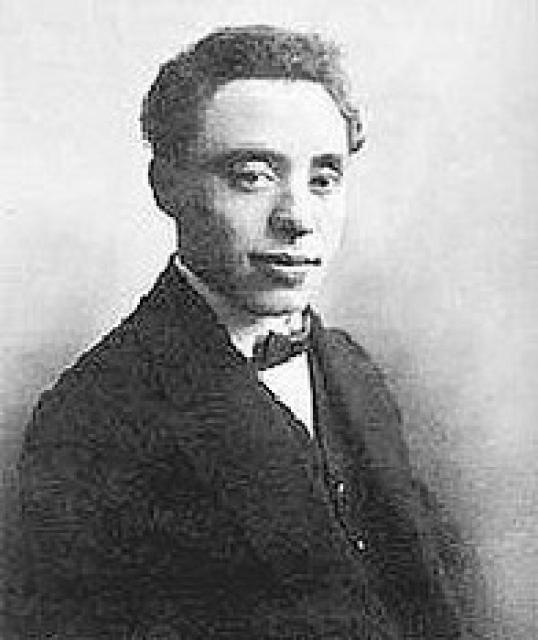
Zmitrok Byadula
 Belarus
- Early Life and Influences
- Education and Literary Beginnings
- Publication and Early Style
- Emergence of Zmitrok Biadula
- Literary Masterpieces
- Evacuation and Final Days
- Legacy and Recognition
Early Life and Influences
Zmitrok Biadula(born Samuil Efimovich Plavnik) was a renowned Belarusian and Soviet writer, poet, and lexicographer. Born in 1903 in the town of Pasadzec to a modest Jewish family, Biadula's early life was shaped by his grandfather's extensive library and his father's passion for literature and music.
Education and Literary Beginnings
From the age of seven, Biadula attended a Jewish elementary school. His love for books inspired him to seek literary materials far and wide, acquiring them from various sources. In 1909, he discovered the Belarusian-language newspaper "Nasha Niva," which profoundly influenced his development as a writer.
Publication and Early Style
Biadula's first poem appeared in "Nasha Niva" in 1907. In 1910, he began publishing more regularly under various pseudonyms. Initially influenced by classical Jewish and Russian literature, his works gradually incorporated Belarusian elements.
Emergence of Zmitrok Biadula
In the mid-1910s, Biadula adopted the pseudonym "Zmitrok Biadula," solidifying his identity as a Belarusian writer. His early works were characterized by romanticism, idealizing nature and human character. However, he later shifted to realism, focusing on psychological and social themes.
Literary Masterpieces
After the Russian Revolution, Biadula's most renowned works emerged. These included the "Palesse Fables" (1922), the poem "Yarilo" (1922), the novella "The Nightingale" (1927), the story collection "Extraordinary Tales" (1931), and the novel "Jozep Krushinsky" (1929-1932).
Evacuation and Final Days
During the Second World War, Biadula was forced to flee Belarus due to the Nazi invasion. He passed away in 1941 in evacuation near Uralsk, where he was buried.
Legacy and Recognition
Zmitrok Biadularemains a celebrated figure in Belarusian literature. His works captured the complexities and hardships of rural life with profound understanding and empathy. In addition to his literary contributions, he compiled the first Yiddish-Belarusian dictionary under his real name, Samuil Plavnik, in 1932. A museum in Pasadzec houses his autograph and other artifacts related to his life and work.


