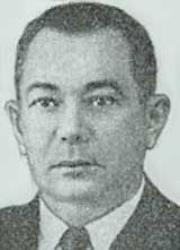
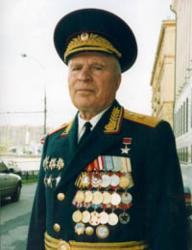
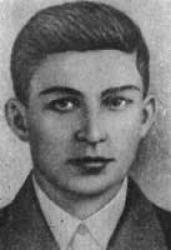
Zoe and Alexander Kosmodemianskie
 Russia
- The Heroes of the Great Patriotic War
- The Enigma of the Kosmodemyanskys' Life
- New Documents Shed Light
The Heroes of the Great Patriotic War
New documents shed a different light on the fate of the Komsomol heroes.
Until recently, it seemed that everything was known about Zoya and Alexander Kosmodemyansky. They had a difficult childhood - their father died when they were still children, and their mother raised them alone. They didn't have much money, but it only made their family closer. Both Zoya and Alexander excelled in school and were members of the Pioneer and then the Komsomol organizations. They performed their heroic acts because they had no other choice. The story "The Tale of Zoya and Shura," written by their mother after the war, only confirmed the iconic image created by propaganda. However, an attentive biographer couldn't help but notice some contradictions. For example, while describing the life of her own family before the revolution, Lyubov Timofeyevna hardly mentioned anything about her husband Anatoly Petrovich's family. And yet, the Churikovs and the Kosmodemyanskys were well acquainted, lived in the same village, and Lyubov Timofeyevna couldn't have known nothing about her husband's relatives.
The Enigma of the Kosmodemyanskys' Life
There are many mysteries surrounding the unexpected relocation of the family to Moscow and the untimely death of Anatoly Petrovich. Moreover, very little was known about Zoya Kosmodemyanskaya's feat. She volunteered for the war, was enrolled in a reconnaissance school, and was captured by the Germans while carrying out a mission and executed after cruel torture. There were no reminiscences from eyewitnesses (the village of Petrishchevo was densely populated), nor were there any details about the mission given to her by the Komsomol. It was also surprising that in the Kosmodemyansky's hometown of Novye Gai near Tambov, a monument to Zoya appeared only on the 50th anniversary of Victory in 1995. This is despite the fact that almost every Soviet city had a street or square named after Komsomol heroes.
New Documents Shed Light
It is only now, with the availability of new documents, that it has become possible to answer most of the previously unanswered questions. The surname Kosmodemyansky was carried by many clergy members in the Tambov province. Before Zoya and Shura's grandfather, Peter Ivanovich, his uncle Vasily Ivanovich Kosmodemyansky served as the priest of the church in Osinoy Gai, and before him, their grandfather, great-grandfather, and so on. Moreover, Peter Ivanovich was born into a priest's family. In addition, the names of the holy brothers Kuzma and Damian (Kosma and Damian) obligated them to a lot. They became famous not only for their medical talents but also for never taking payment for their skills. Legend has it that after the death of their parents, the brothers were visited by the Holy Spirit, who endowed the orphans with talents but warned them, "You have received it for free, so give it for free." However, once Damian succumbed to persuasion and accepted chicken eggs from one of the women he had cured, which upset Kosma so much that he even decided to be buried separately from his brother. In any case, they entered the holy chronicles as selfless healers who continued to help the suffering even after death.
After graduating from the seminary, Peter Ivanovich was appointed as a psalmist in the church of the village of Bolshaya Lipovka in Morshansk district. There, he organized a school for rural children and was ordained as a priest in 1900. After his uncle's death, he became the rector of the Znamenskaya church in Osinoy Gai. According to Lyubov Timofeyevna's memories, there used to be dense aspen forests in those places, but by the beginning of the last century, nothing was left of them, fertile soils were eroded, and once the house located on the edge of the village even slid down into the ravine, burying all its inhabitants.
The village had almost a thousand households, and someone from each family always worked in the city. The kind-hearted priest came in handy in Osinoy Gai. He taught and provided free medical treatment, and if necessary, he could always help with money. Additionally, being married and having four sons, Father Peter didn't shy away from simple village work - planting crops, growing vegetables, and raising livestock. He sent his eldest son, Anatoly, to the Seminary and supported him as much as he could. It seemed that nothing could disrupt the established way of life, but then the revolution broke out. The division between the Reds and the Whites was felt most strongly in the Tambov region. The suppression of the peasant uprising in this province was highlighted in Soviet textbooks alongside the main battles of the Civil War.
By the middle of 1918, the Tambov province went from being a grain supplier to one in urgent need. Ruthless grain confiscation and repression against those who hid it affected every family, and the Osinogai Kombinat stood out with its special brutality. And of course, Father Peter Kosmodemyansky could not stay aside from what was happening.
According to the memories of the elders, recorded in the 1980s, on Trinity Sunday, the priest made it clear that the so-called Kombinats represented not the poor and destitute, but a mob that didn't want to work and engaged in ordinary looting under the guise of "fighting exploiters." He was not forgiven for this.
On the night of August 26-27, 1918, drunken bandits dragged the priest out of his house, beat him half to death in front of his wife and three younger children, tied him to a saddle by his hands, dragged him through the village, and threw him into the Sosulinskoye ponds.
It was only in the spring when his body was discovered, and according to the testimony of the same witnesses, "it was intact and had a waxy complexion." He was buried in the cemetery near the Znamenskaya church, where Peter Ivanovich had served in his last years. Although it is believed that everything is known about the further fate of the Kosmodemyanskys, new documents help to look at it in a new way. In "The Tale of Zoya and Shura," Lyubov Timofeyevna tells in detail about the hardships they had to endure but remains silent about many things. For example, how could she write that both the grandfathers and great-grandfathers of the Komsomol heroes were priests, and their constant moves from place to place before the war were primarily driven by fear of repression? Only once could one perhaps see a hint of the existing legend: when Lyubov Timofeyevna recalls that her young daughter in Osinoy Gai was compared to an angel by the villagers. But then again, how many children are compared to angels? The difference lies in who they grow up to be.
After the death of Peter Ivanovich, the Kosmodemyanskys stayed in the same place for some time. But the widow didn't dare to bury him until she received permission from the new authorities. The eldest son, Anatoly, left his studies in Tambov and returned to the village to help his mother with the younger children. When they grew up, he married Lyuba, the daughter of a local clerk. On September 13, 1923, Zoya was born, and two years later, Alexander.
"Zoya was small and fragile. She started walking at eleven months. People loved her because she was very friendly and trusting. When she went out of the gate, she smiled at every passerby, and if someone said to her, 'Let's go to my place, little angel,' she would reach out her hands and go with them right away."
Lyubov Timofeyevna and Anatoly Petrovich worked as teachers, but in 1929, collectivization began, and the Kosmodemyanskys were reminded of their origin. Almost everyone scattered - the younger ones went south, and Anatoly with his family went to Siberia, to the small village of Shitkino on the Yenisei. Only the mother refused to leave, stating that she would be buried next to her husband.
Anatoly changed several places until he finally ended up in Moscow with the distant relatives of his wife.
At first, it seemed that life was getting better - Lyubov Timofeyevna taught, and Anatoly got a job at the Timiryazev Agricultural Academy, and the Kosmodemyanskys were given an apartment. But in 1933, Anatoly Petrovich died.
The information about the causes of his death is quite contradictory. According to some, he died of tuberculosis, but then why wasn't the illness known earlier? According to others, Kosmodemyansky died from some infection acquired at work. However, the Academy had strict epidemiological safety measures, and the health of employees was monitored. The third version suggests that information about the non-proletarian origin of the Kosmodemyanskys reached Moscow, and to divert repression from their loved ones, Anatoly took his own life. In any case, the family's grief only brought them closer together.
However, some questions remain unanswered. Why didn't the Kosmodemyanskys, who fled their native village, fear coming to Moscow? In the 1930s, it was not the best place to avoid repression.
How did Anatoly Petrovich manage to get a job at the Timiryazev Agricultural Academy and almost immediately get a separate apartment with only a certificate of completing four grades at the Seminary (which he never finished)? This was a time when even more responsible workers lived in communal apartments.
And finally, could all of this, as well as Anatoly Petrovich's sudden death, be explained by the fact that, cornered, he agreed to cooperate with the NKVD, and when that cooperation didn't yield anything useful, he was either killed or, again, took his own life? In the late 1980s, the Kosmodemyanskys faced criticism from journalists.
Shura was accused of having an explosive temper and constantly getting into trouble. It was said that there wasn't a day when the boy didn't get into a fight. However, they forgot that, according to the testimonies of classmates and teachers, it was Alexander who fought to defend the weaker ones and his sister, who couldn't stand up for herself.
Documents were found that showed Zoya was registered at a psychiatric hospital. However, it wasn't mentioned that a year before the war, the girl had a severe case of meningitis, and such patients were observed at that time in psychiatric hospitals. Supporters of speculation about her mental illness were not even bothered by the fact that if she suffered from any mental illness, she would never have been assigned to the reconnaissance school.
There were also those who denied Zoya's feat, claiming that it was either Vera Voloshina or Lisa Chaikina who performed it, and it was attributed to Kosmodemyanskaya. Some even questioned the mission assigned to the scouts. According to them, Zoya was detained by peasants angry that she was planning to set their houses on fire, and there were no Germans in that village.
However, it was only with the declassification of the criminal case No. H-16440 against Vasily Klubkov for treason and betrayal of the homeland that the truth was finally revealed.
Immediately after the start of the war, Zoya volunteered and was assigned to a reconnaissance school. The school was located near the Kuncevo station in Moscow, where she met Klubkov.
"I didn't like her from the beginning... She looked at me as if she wanted to embarrass me."
In mid-November, an order was received at the school to burn the villages where the Germans were billeted. Two units were created, each consisting of ten people. However, only three arrived at the village of Petrishchevo on November 22 - Kosmodemyanskaya, Klubkov, and the more experienced Boris Krainov.
It was decided that Zoya would set fire to the houses in the southern part of the village, where the Germans were quartered; Klubkov would do it in the northern part, and the commander would do it in the center, where the German headquarters was located. After completing the mission, everyone was supposed to meet at the same place and then return home.
Krainov acted professionally, and his houses caught fire first, then those in the southern part, but the ones in the northern part didn't catch fire. Krainov waited for his comrades almost the whole next day, but they never returned.
From Boris Krainov's interrogation protocol: "I learned about Kosmodemyanskaya's arrest only on January 15, that is, after the liberation of the village of Petrishchevo, when our units discovered her body. Later, we met with Klubkov - he said that he encountered Germans in the village and didn't have time to do anything. He went back to the meeting place and was captured, from where he escaped. I was already surprised that he didn't ask about Zoya."
From Vasily Klubkov's interrogation protocol: "When I approached the buildings I had to set on fire, I saw that the areas of Kosmodemyanskaya and Krainov had already caught fire. Approaching the house, I smashed a bottle of incendiary mixture and threw it, but it didn't ignite. At that moment, I saw two German sentries not far from me and decided to run into the forest located 300 meters from the village. As soon as I reached the forest, two German soldiers pounced on me and handed me over to a German officer. He pointed a revolver at me and demanded that I reveal who else had come with me to set fire to the village. I told him that there were only three of us and named Krainov and Kosmodemyanskaya. The officer immediately gave some orders, and after some time, Zoya was brought in. They asked her how she set fire to the village. Kosmodemyanskaya replied that she did not set fire to the village. After that, the officer began to beat her and demanded that she give testimony. She remained silent, so they stripped her completely and beat her with rubber sticks for 2-3 hours. But Kosmodemyanskaya said only one thing: 'Kill me, I won't tell you anything.' She didn't even give her name. She insisted that her name was Tanya. After that, they took her away, and I never saw her again."
Klubkov was tried and executed. This was hidden to not tarnish the true heroism with betrayal. On February 16, 1942, Zoya Kosmodemyanskaya was awarded the title Hero of the Soviet Union, and her remains were reburied at the Novodevichy Cemetery in Moscow.
At the end of the war, under the Firbrudenkrug, Zoya's younger brother, Senior Lieutenant Alexander Kosmodemyansky, also died heroically.
Streets and squares in almost every Soviet city were named after the heroes, memorials were created, and monuments were erected...
But perhaps the most genuine and kind memory is that of the people from Zoya and Shura's hometown of Osinoy Gai.
Although a monument was only erected here for the 50th anniversary of Victory, the memory of the angels who would come and go without making people happier was always cherished.
In 1946, when it became possible, a church was reopened in Osinoy Gai. Strangely enough, it suffered little damage - everything, right down to the silver candlesticks, was returned to the church by the villagers.
A cross with two angels bowing down at their feet was placed on the grave of Father Peter. And the villagers have no doubt that the priest foresaw the martyrdom of his own grandchildren before his death.
Currently, the Tambov Diocese is considering his canonization.