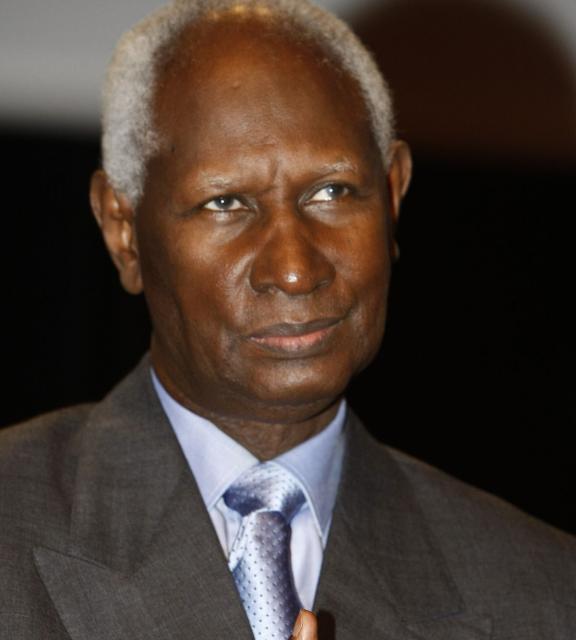
Abdou Diouf
 Senegal
- Abdou Diouf: A Senegalese Statesman
- Public Service and Political Ascent
- Prime Minister and Presidency
- Significant Events in Office
- Post-Presidency and International Leadership
- Legacy
Abdou Diouf: A Senegalese Statesman
Early Life and EducationAbdou Diouf was born into a postal worker's family in 1935. He received his secondary education at the lycée in Saint-Louis before pursuing law studies at the University of Dakar and the Sorbonne, earning a law degree in 1959. He also completed studies at the French School for Training Overseas Administrative Staff.
Public Service and Political Ascent
Upon his return to Senegal, Diouf entered government service as Deputy Secretary-General of the Government. In June 1961, he became Secretary-General of the Ministry of Defense and joined the ruling Senegalese Progressive Union (PSU) party. He held various government positions, including Governor of the Sine-Saloum region, Director of the Cabinet of the Foreign Minister, and Director of the Cabinet and First Secretary of the President's Office.
Prime Minister and Presidency
In 1970, Diouf was appointed Prime Minister, a role with primarily technical functions. After the resignation of President Léopold Sédar Senghor, Diouf automatically succeeded him on January 1, 1981. He was re-elected in 1983, 1988, and 1993.
Significant Events in Office
During Diouf's presidency, Senegal intervened in Gambia in 1981, leading to the deaths of over 500 people. He established the Senegambia confederation with Gambia in 1982, which dissolved in 1989 due to a border conflict with Mauritania.
Post-Presidency and International Leadership
In 2000, Diouf lost the presidential election to opposition leader Abdoulaye Wade. From 2003 to 2014, he served as Secretary-General of the Organization of Francophone Countries.
Legacy
Abdou Diouf is remembered as a prominent Senegalese politician who contributed significantly to the country's development during his time in office. His presidency was marked by both achievements and challenges, shaping Senegal's political and economic landscape.