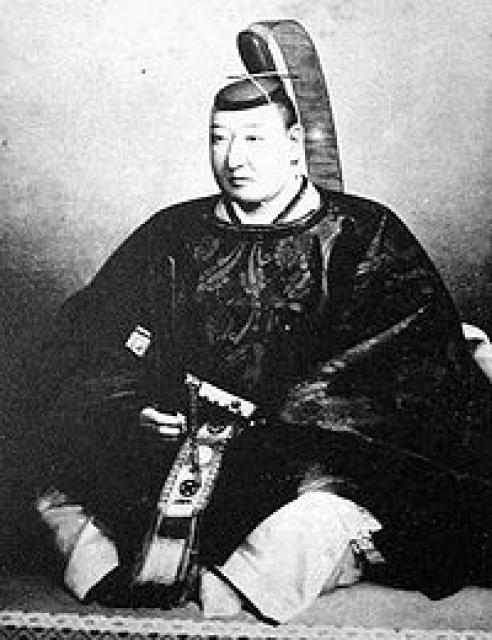
Abe Masahiro
 Japan
Japan- Abe Masahiro: A Pivotal Figure in Edo-Era Japan
- The Ansei Reforms
- Opening of Japan to Foreign Trade
- Administrative and Military Modernization
- Conflict and Resignation
- Later Years and Legacy
Abe Masahiro: A Pivotal Figure in Edo-Era Japan
Early Life and Rise to ProminenceAbe Masahiro was born on December 3, 1819, to a samurai family in Edo. His father was a vassal of the Tokugawa shogunate and governor of the autonomous Fukuyama-han in Bingo Province. Due to the ill health of his elder brothers, Masahiro inherited the governorship in 1836. In 1843, he was appointed as a senior elder (roju) of the Tokugawa shogunate.
The Ansei Reforms
After the resignation of Mizuno Tadakuni in 1845, Masahiro became head of government and was entrusted with the affairs of the nation. Aware of China's defeat in the Opium War, Masahiro initiated a series of reforms, known as the Ansei Reforms. These measures included strengthening Japan's defenses and modernizing the government.
Opening of Japan to Foreign Trade
In 1853, Commodore Matthew Perry arrived with a squadron of American ships, demanding diplomatic relations. Masahiro convened a nationwide assembly to seek consensus on how to respond. Despite strong opposition from isolationists, he ultimately succumbed to foreign pressure and concluded treaties of "peace and friendship" with the United States, Russia, and Great Britain in 1854.
Administrative and Military Modernization
Masahiro played a key role in updating the shogunate's administrative apparatus. He sought the assistance of eminent daimyo (regional feudal lords), such as Tokugawa Nariaki and Shimazu Nariakira, as well as talented samurai from lower ranks. He established the Nagasaki Naval Training Center and the Nishiyama ironworks to modernize the Japanese navy.
Conflict and Resignation
Masahiro's modernization policies and active engagement with foreign powers met with strong resistance from conservative members of the shogunate. In 1855, he handed over the government to Hotta Masatoshi and resigned the following year.
Later Years and Legacy
Abe Masahiro passed away on September 6, 1857, at the age of 37. His legacy as a pivotal figure in Edo-era Japan remains contested. While some view him as a forward-thinking reformer who sought to strengthen and modernize the country, others criticize his role in opening Japan to foreign influence.