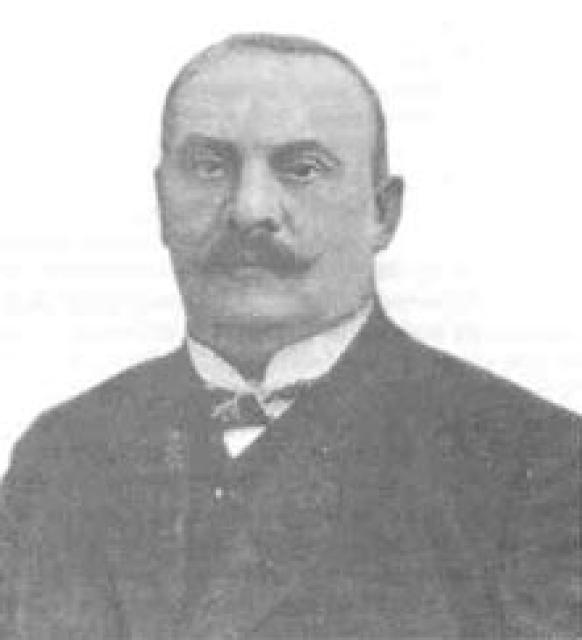
Adam Liubinskiy
 Russia
- Early Life and Military Service
- Political Activism and the Right-Monarchist Movement
- Leadership of the Kiev Branch of the RNSMA
- Views on Education and the Jewish Question
- Later Career and Legacy
Early Life and Military Service
Alexander Vasilievich Lyubinsky was born into a noble family in the Kherson Governorate, Russian Empire. He joined the Vladimir Cadet Corps in Kiev and later the Alexander Military School in Moscow. Upon graduation, he was commissioned into the 12th Artillery Brigade. After a brief military career, he retired in 1892 and entered civil service in the Ministry of Internal Affairs.
Political Activism and the Right-Monarchist Movement
Lyubinsky's political involvement began in 1905, when he founded the Kiev Party of Law and Order (KPPO). He also became a member of the Union of Russian People (URP), a right-wing monarchist organization. Within the KPPO, Lyubinsky advocated for the preservation of the autocracy and the suppression of revolutionary movements.
Leadership of the Kiev Branch of the RNSMA
In 1908, Lyubinsky established the Kiev branch of the Russian People's Union named after St. Michael the Archangel (RNSMA). As its chairman, he played a prominent role in the organization's activities, including opening sewing workshops to provide employment for potential members. Lyubinsky also served as the chairman of the United Union of Right-Wing Organisations in Kiev.
Views on Education and the Jewish Question
Lyubinsky was a staunch defender of church-parish schools, arguing that they played a crucial role in moral education. He criticized the idea of concentrating financial resources solely on secular schools. Additionally, Lyubinsky expressed complex views on the Jewish question. While acknowledging the economic role of Jews, he proposed measures to limit their influence and promote their assimilation into Russian society.
Later Career and Legacy
Lyubinsky's later years were marked by active involvement in various right-wing organizations, including the Kiev Club of Russian Nationalists and the All-Russian Filaret Society for People's Education. He passed away after a brief illness and was buried at the Askold's Grave Cemetery in Kiev.