Adolf Dirr
 Germany
Adolf Dirr
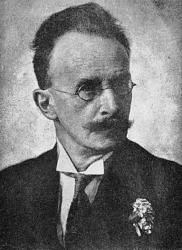
Early Life and Scholarly InterestsAdolf Dirr was born on 17 December 1867 in Augsburg, Germany. He became a philologist, linguist and ethnographer whose work focused especially on the peoples and languages of the Caucasus. Details of his early education are not widely recorded, but his later career shows a sustained interest in studying languages through direct contact, documenting grammars and preserving oral traditions.
Dirr’s principal field of work was Tiflis, now Tbilisi, Georgia, a major cultural and political center in the Caucasus. The region’s extraordinary linguistic diversity drew scholars from across Europe, yet many of its languages had little written documentation. Dirr sought to record their structure and vocabulary, producing grammatical sketches and language materials that made them more accessible to other researchers.
Research in the Caucasus
Among Dirr’s early linguistic works were a grammar of the Udi language, published in Tiflis in 1903, and a grammatical study of Tabasaran, published there in 1905. These publications joined grammatical description with texts and vocabulary, allowing readers to study not only rules but also the language in use. His work reflected the demands of field research: listening carefully, comparing forms and building a record from speech and texts.
Dirr worked across several languages and communities of the Caucasus. His interests ranged from linguistics to ethnography and folklore, and his writing helped preserve accounts of traditions that might otherwise have remained outside the published record. In 1913, he became a conservator at Munich’s Museum of Ethnology, a position he held until his death. The post gave him an institutional base from which to organize, interpret and present material collected from the region.
War and Museum Work
The First World War interrupted scholarly life across Europe and brought Dirr into a new political context. In 1918, he was part of the German Caucasus force under General Friedrich Kress von Kressenstein in Georgia. His involvement placed his regional knowledge within a military expedition at a moment when Germany sought influence in the Caucasus. This episode is an important part of the historical setting of his work, as scientific study and imperial interests often overlapped in the region.
After the war, Dirr continued his scholarship and museum work in Munich. He published studies on the Ubykh language and an introduction to the study of Caucasian languages, both in 1928. These works showed his enduring commitment to linguistic description, while his broader ethnographic interests remained visible in his translations and collections of folk narratives.
Caucasian Folklore
One of Dirr’s best-known books for general readers was Kaukasische Märchen, a collection of translated folktales published in 1920. It brought together stories from many communities, including Abkhaz, Avar, Kabardian, Karachay, Mingrelian, Ossetian, Chechen and Udi traditions. The collection included fairy tales, animal fables, epic legends and humorous stories. By presenting these narratives in translation, Dirr introduced a wide European audience to the storytelling traditions of the Caucasus.
Folklore was more than a popular diversion in Dirr’s work. Stories preserve details of local imagination, values and cultural memory, and his translations helped make them available beyond the communities in which they circulated. Like his linguistic studies, the collection was an effort to document cultural expression across a region whose many languages and histories were often poorly understood elsewhere.
Legacy
Adolf Dirr died on 9 April 1930 in Passau, Germany. He left behind grammars, language sketches, translations and ethnographic writings that made him a notable early scholar of the Caucasus. Later researchers have continued to use and assess his materials, while also placing them in the context of the period’s academic and political interests.
His career connected field study in Georgia with the collections and scholarly institutions of Munich. Through detailed work on languages such as Udi, Tabasaran and Ubykh, and through his collection of Caucasian folklore, Dirr helped preserve a record of the region’s linguistic and cultural richness. His legacy rests on that broad documentation and on the lasting value of treating local languages and stories as subjects worthy of serious study.