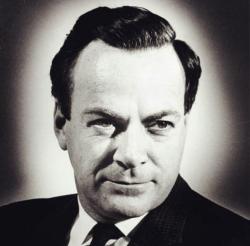
Albert Michelson
 USA
USA- Biography of Albert Michelson
- Interest in the Speed of Light
- Interferometer and the Search for the Ether
- Later Career and Achievements
- Legacy
Biography of Albert Michelson
Albert Abraham Michelson was an American physicist who was born in Strzelno, Germany, near the Polish border, to Samuel Michelson, a merchant, and Rose (Pzybulska) Michelson, the daughter of a doctor. Michelson was the eldest of three children. When he was two years old, his parents emigrated to the United States, where his father became a supplier of dry goods during the California and Nevada gold rushes. Michelson was sent to live with relatives in San Francisco, where he attended a boys' high school. He later moved to a boarding house owned by the school's director, who sparked his interest in natural sciences and advised him to apply to the United States Naval Academy in Annapolis, Maryland. With a letter of recommendation from his congressman, Michelson appealed to President Ulysses S. Grant for admission to the academy, even though there were no vacancies. His persistence made such an impression on the officials that a spot was specifically allocated for him in 1869. Michelson graduated from the academy in 1873, served as an ensign for two years, and was appointed as a professor of physics and chemistry at the academy in 1875. He held this position for the next four years.
Interest in the Speed of Light
In 1878, Michelson became interested in measuring the speed of light. Light and optics became his life's work. Although by that time the speed of light had already been measured by French physicists Hippolyte Fizeau, Léon Foucault, and Marie Alfred Cornu, the results of these measurements were not considered accurate. Using $2,000 gifted to him by his stepfather, Michelson significantly improved Foucault's method and measured the speed of light with previously unattainable precision. His work attracted international attention. In 1880, Michelson left Annapolis and spent two years studying optics in Europe. During his stay in Europe, he designed an interferometer - a device in which various optical phenomena are measured based on the interference of light waves.
Interferometer and the Search for the Ether
Having mastered the art of creating physical instruments, Michelson invented an interferometer to detect the motion of the Earth through the stationary ether, which was believed to fill all of space at that time. Scottish physicist James Clerk Maxwell, who theoretically proved that light consists of electromagnetic waves, suggested that the electromagnetic wave should propagate in a specific medium. Maxwell also hypothesized that the existence of the ether could be detected by measuring the speed of light relative to the motion of the Earth. If the ether is indeed a medium for light and the Earth is moving relative to it, then the speed of light should be different and depend on whether the light is moving towards, away from, or at an angle to the Earth. No one had been able to experimentally detect the motion of the Earth through the ether, but it was speculated that the failure of all attempts was due to the lack of adequate measuring devices. It was this gap that Michelson intended to fill with his interferometer.
In the high-precision interferometer, a beam of light is split into two by a semi-silvered mirror and then these two beams are recombined. Michelson believed that since the two beams of light travel different paths (in the direction of the Earth's motion and perpendicular to it), they should have different speeds relative to the Earth. Therefore, the waves from these two beams, when combined, would have different phases, resulting in an interference pattern similar to that observed when waves intersect on the surface of a pond. Interference creates alternating bright and dark fringes, forming an interference pattern. Michelson made his first attempt to detect the motion of the Earth through the ether using an interferometer in 1881, while working with Hermann von Helmholtz in Berlin. Much to his surprise, he did not observe an interference pattern: both beams traveled at the same speed. Michelson was so confident in the accuracy of his measurements that in a report on his experiment, published in the "American Journal of Science," he dared to make the bold statement, "Thus, it is shown that the hypothesis of a stationary ether is incorrect." Although the importance of Michelson's experiment was widely recognized, some physicists pointed out possible sources of errors in the experimental setup, which cast doubt on the correctness of the conclusions.
Later Career and Achievements
After a hiatus due to his work for the United States Armed Forces during World War I, Michelson returned to his research. This time, his interests turned to astronomy. Michelson proposed several methods of using the interferometer to measure the diameter of small objects such as asteroids, the moons of planets in the Solar System, and large bright stars. In 1920, Michelson was the first to successfully measure the diameter of a distant star. He reported that the diameter of the giant star Betelgeuse was 240 million miles. While conducting these investigations, which were carried out on the telescope at Mount Wilson Observatory near Pasadena, Michelson increasingly spent time in California. He also worked at the California Institute of Technology. Michelson made the first rigid Earth measurements by using the interferometer to determine the tidal fluctuations in water pipes buried in the ground. In 1925, he became the first honorary professor at the University of Chicago, but in 1929, he left Chicago and devoted himself entirely to research in California.
Michelson's marriage to Margaret Hemingway (1877), with whom he had a daughter and two sons, ended in divorce in 1897. Two years later, Michelson married Edna Stanton, with whom he had three daughters. Michelson was known as a watercolor artist and a talented violinist. He taught music to his children and excelled at tennis, billiards, chess, and bridge, as well as sailing.
Legacy
Known for his determination, Michelson always preferred scientific research over administrative work and teaching. He disliked interacting with graduate students and only occasionally gave lectures and presentations. In his final year, despite several serious strokes, Michelson continued to lead research while lying in bed. His last project, which he did not live to complete, was an attempt to further refine the measurement of the speed of light. Michelson died from a brain hemorrhage on May 9, 1931, in Pasadena, California.
Although Michelson never defended a doctoral dissertation, he was awarded honorary doctorates by eleven major universities in Europe and America. In addition to the Nobel Prize, his numerous awards included the Coplée Medal of the Royal Society of London (1907), the Henry Draper Medal of the National Academy of Sciences (1916), the Franklin Medal of the Franklin Institute (1923), the Gold Medal of the American Institute of Physics (1926), and the Matteucci Medal of the Italian Society of Sciences (1927).