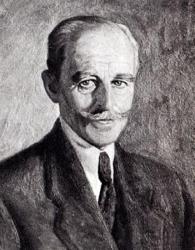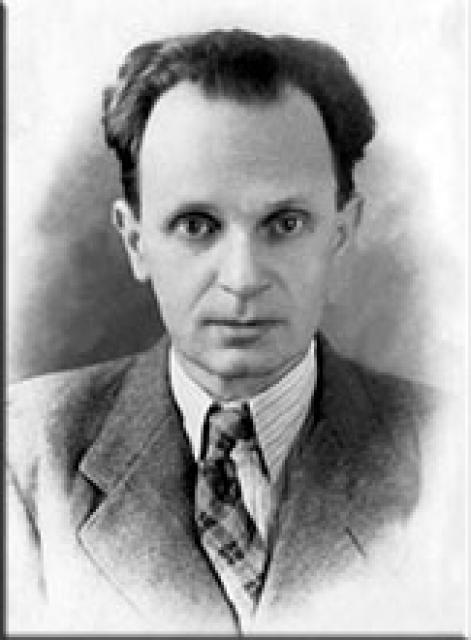
Alexander Dubyago
- Aleksandr Dmitrievich Dubyago: A Trailblazing Cometary Astronomer
- Early Career
- Pioneering Cometary Research
- Establishing the Kazan Comet School
- Study of Comet Brooks
- Unveiling the Dynamics of Cometary Motion
- Insights into Cometary Structure and Evolution
- Contributions to the Understanding of Comets and Meteors
Aleksandr Dmitrievich Dubyago: A Trailblazing Cometary Astronomer
Early Life and EducationAleksandr Dmitrievich Dubyago was born on December 18, 1903, in Kazan, Russia, into a family of renowned scientists. His father, Dmitry Ivanovich Dubyago, was a renowned Russian astronomer at Kazan University. It is no surprise that Aleksandr developed an early fascination with astronomy. By the age of 12-13, he was already observing variable stars, and at 14, he became one of the first to observe a Nova in the constellation Aquila.
Early Career
Dubyago's first astronomical work, a manuscript describing a brilliant meteor observed near Kazan in the summer of 1918, remained unpublished but showcased his budding talent. He began his career at the early age of 15, joining the staff of the Astronomical Observatory at Kazan University as a calculator, also responsible for timekeeping.
Pioneering Cometary Research
During his student years at Kazan State University, Dubyago passionately pursued theoretical astronomy while also excelling as an observer. He discovered two comets: 1921 I (Dubiago), later renamed C/1921 H1 (Dubiago), and 1923 III (Bernard — Dubiago).
Establishing the Kazan Comet School
Dubyago's groundbreaking work on cometary astronomy earned him international recognition as the founder of the Kazan Comet School. He published his first papers on cometary motion in 1923, including the prediction of the reappearance of comet 6P/d'Arrest in 1923 and a definitive orbit for comet 1909 IV (Daniel).
Study of Comet Brooks
Throughout his career, Dubyago remained fascinated by comet Brooks. He successfully predicted its reappearance in 1925 after an extended absence due to Jupiter's gravitational influence. In his extensive research on this comet, he discovered a secular acceleration in its orbital motion.
Unveiling the Dynamics of Cometary Motion
Dubyago meticulously analyzed the motion of comet Brooks over multiple apparitions and its close approach to Jupiter in 1886. He demonstrated that comets' departures from gravitational theory were not exceptions but rather common occurrences. His theory of cometary motion, based on stellar perturbations rather than linear or quadratic time-based effects, was groundbreaking.
Insights into Cometary Structure and Evolution
Dubyago proposed that comets are agglomerations of particles loosely bound by mutual gravitational attraction. Through mathematical models, he showed that only rarefied swarms of large particles, with minimal collisions, could exist over extended periods. He also explored the possibility of cometary disintegration under gravitational influences, suggesting the formation of pseudo-libration points where debris could accumulate.
Contributions to the Understanding of Comets and Meteors
Dubyago strongly opposed theories that proposed distinct origins for short- and long-period comets. He argued that comets are genetically linked to meteor streams, implying that their nuclei cannot be monolithic like asteroids. He proposed that comets form from dust environments in the solar system, with dust swarms experiencing gravitational perturbations that lead to their compaction and subsequent observations as comets.