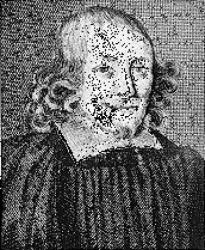
Tomasz Zebrowski
 Lithuania
- Astronomer and mathematician
- Education and Career
- Astronomical Observatory and Contributions
- Architectural Achievements
- Astronomical Observatory Design
Astronomer and mathematician
Tomasz Żebrowski was an astronomer and mathematician, as well as a professor of mathematics and philosophy at the Academy and University of Vilnius and the Society of Jesus. He was born in Žemaitija on November 24, 1714.
Education and Career
Żebrowski studied philosophy at the Academy and University of Vilnius from 1735 to 1738, and then theology from 1740 to 1744. He furthered his education abroad, studying mathematics and astronomy at Charles University in Prague under the mathematician and astronomer Josef Stepling from 1750 to 1752. He also published two small textbooks on arithmetic and geometry, which some sources describe as examination programs in mathematics and geometry. These textbooks were written in Latin. Żebrowski earned his doctorate in philosophy and liberal arts in 1752 and became a professor of mathematics at the Academy and University in the same year.
Astronomical Observatory and Contributions
In 1752, Żebrowski designed the building for the astronomical observatory in Vilnius, which is considered the fourth oldest in Europe and the oldest in Eastern Europe. However, other sources suggest that Żebrowski actually designed the observatory in 1742. In 1753, he founded the physics and astronomy cabinet and supervised the construction of the observatory. He also imported the necessary astronomical equipment from England. The telescope used in the observatory was in operation until the end of the 18th century. Today, this oldest telescope in Lithuania is displayed in the Science Museum of Vilnius University in the White Hall of the library. Its restoration, including the optical system and the creation of missing parts, was funded by the company "Lietuvos telekomas" in 2003.
During his tenure as the director of the Vilnius University Observatory from 1753 to 1758, Żebrowski conducted systematic astronomical observations, including occultations of Jupiter. In 1756, he determined the geographical latitude of Vilnius.
Architectural Achievements
Apart from his contributions to astronomy, Tomasz Żebrowski was also a prominent late Baroque architect and one of the most notable representatives of the Vilnius Baroque and Rococo School. His architectural career began in 1746 when he was sent to continue the construction of the Jesuit Church in Babruysk. From 1748 to 1750, he rebuilt the Church of St. Ignatius in Vilnius after a fire, giving it characteristics of the "new style" Rococo. In 1755, Żebrowski designed and started the construction of the Jesuit Church in Ilūkste, Latvia. He also created the design and initiated the construction of the Benedictine Church in Kroże (the Church of the Immaculate Conception of the Blessed Virgin Mary; 1757-1763) and the Jesuit monastery and school building in Žasliai, Belarus. Żebrowski's design for the mid-18th-century chapel in the Jesuit Collegium Church, located in the Great Courtyard of Vilnius University, was also implemented.
Astronomical Observatory Design
Żebrowski's most famous architectural work, well acquainted with the structure of astronomical observatories in Prague and Vienna, is the astronomical observatory. His design is depicted by the artist Ignacy Eggenfelder, from the second half of the 18th century, in portraits of Żebrowski and Elżbieta Oginski-Puzyna, who funded the construction of the observatory (the portraits are kept in the Lithuanian Art Museum). The observatory was built on top of the former three-story northern wing of the college building, which had an unobstructed horizon in the 18th century. It consisted of two interconnected halls built on top of each other, forming the fourth and fifth floors, as well as two three-story octagonal towers. The large hall on the fourth floor (now the White Hall of the Vilnius University Library) housed instruments for astronomical observations and physical experiments, scientific collections, and educational activities. The extension of the fifth floor above the vault of the main hall was intended for astronomical observations. The necessary instruments for these observations were raised from the main hall through a hatch.
The towers at the corners of the observatory resembled Baroque towers of Vilnius churches. They were supposed to be identical and represent the science of astronomy through their architectural form. According to the design, the top of the eastern tower was supposed to be adorned with a terrestrial sphere and the western tower with a celestial sphere. However, the construction of the western tower was never completed before Żebrowski's death. The eastern tower, built according to his design, was adorned with a weather vane instead of a globe. Martin Počobut-Odlanicki later claimed that the building designed by his teacher Żebrowski surpassed the Royal Greenwich Observatory in external grandeur. During renovations in 1825, Karol Podczaszyński gave the tower a neoclassical appearance. The western tower was demolished in 1837, and the upper third floor of the eastern tower was dismantled, transforming it into an observation deck.