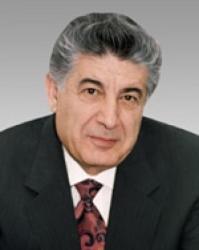
Alexandr Moroz
 Ukraine
Alexander Moroz - Soviet and Ukrainian political figure
Alexander Moroz was a Soviet and Ukrainian political and state figure. He was born on February 19, 1944, during the war, but due to delays in registration, his official date of birth is considered to be February 29.
Early Life and Education
Moroz completed his secondary school education in 1960 and went on to study at the Ukrainian Agricultural Academy, graduating in 1965. Later, in 1983, he obtained a second degree in political science from the Higher Party School with honors. He worked as an engineer and teacher in the Zhytomyr and Kyiv regions for 12 years, and served in the Soviet army in the air defense forces from 1965 to 1966. From 1966 to 1974, he worked as a teacher and head of the agricultural mechanization department at the Taraschanka Technical College. In 1974, he became a senior engineer-technologist at the Taraschansk District Association "Agricultural Machinery," and in 1975, a senior engineer at the Kyiv Regional Association "Agricultural Machinery." Moroz became a member of the Communist Party of the Soviet Union (CPSU) in 1972 and held various positions within the party, eventually becoming the secretary of the regional council of trade unions from 1983 to 1989, the head of the agricultural department of the Kyiv Regional Committee of the CPSU from 1989, and the first secretary of the party committee of regional organizations and institutions. He was elected as a member of the Ukrainian Parliament in 1990 and led the "Group 239" - a left-wing anti-presidency majority in the first convocation of the Ukrainian Parliament.
Political Career
After the ban on the activities of the CPSU in 1991, Moroz convened the Constituent Congress of the Socialist Party of Ukraine (SPU), which many members saw as the continuation of the Ukrainian Communist Party. As the chairman of the SPU, Moroz made efforts to create a left-center party of the European type that advocated for democratic socialism. He considers himself to be a moderate left-wing member of the socialist movement. During the formation of the SPU and the shift in its ideology towards social democracy, some orthodox communists led by Natalia Vitrenko left the party and formed the Progressive Socialist Party of Ukraine, while another group led by Ivan Chizh leaned towards compromise with the Kuchma regime (All-Ukrainian Union of the Left "Justice").
The political program of the SPU included the need for constitutional reform and the transfer of significant presidential powers to the parliament and the government. After Viktor Yushchenko agreed to the constitutional reform during the Orange Revolution, the SPU supported him and joined the government of Yulia Tymoshenko and later Yuriy Yekhanurov. Moroz also advocated for giving the Russian language official status (but not as a second state language) in Ukraine. He is passionate about poetry and has written seven books. In 1996, Moroz prevented Leonid Kuchma from usurping full power by accepting the new Constitution of Ukraine. In 1999, he became one of the co-founders of the "Kanev Four" - a pre-election coalition of four opposition politicians against Leonid Kuchma - and became the recognized leader of the opposition in Ukraine.
The culmination of Moroz's struggle against the regime was the disclosure of the so-called "Melnychenko tapes" at a meeting of the Ukrainian Parliament in late 2000, which marked the beginning of the "Cassette Scandal." The recordings of conversations between high-ranking Ukrainian officials (President Leonid Kuchma, Chief of Presidential Administration Volodymyr Lytvyn, and Minister of Internal Affairs Yuriy Kravchenko) made by Major Mykola Melnychenko of the Security Service of Ukraine provided evidence of their connection (primarily President Kuchma) to the murder of independent journalist Georgiy Gongadze. These revelations shocked the Ukrainian public.
Moroz later became one of the founders of the "Forum for National Salvation" and actively participated in the "Ukraine without Kuchma" and "Rise, Ukraine!" campaigns.
In the parliamentary elections of 2002, the SPU became the fifth largest parliamentary party and formed a united parliamentary opposition along with the Communist Party of Ukraine, Yulia Tymoshenko Bloc, and "Our Ukraine" led by Viktor Yushchenko, opposing the policies of the Kuchma administration and its prime ministers. Alexander Moroz ran for president in 1994 and 1999, but did not make it to the second round of elections. In both cases, he finished in third place, receiving 13.04% of the votes in 1994 and 11.29% in 1999. Political analysts predicted an easy victory for Alexander Moroz over the unpopular Leonid Kuchma in the 1999 elections if the leader of the Communist Party of Ukraine, Petro Symonenko, had withdrawn his candidacy in favor of the socialist leader.
During the presidential elections in Ukraine in 2004, Moroz, nominated by the Socialist Party of Ukraine, came in third place with 5.81% of the votes. During the "Orange Revolution," Moroz supported Viktor Yushchenko, who was considered the opposition candidate. Many supporters of Moroz voted for Yushchenko and actively participated in protests against electoral fraud, making Moroz's support one of the decisive factors in Yushchenko's victory. After lengthy negotiations, the socialists were rewarded with three ministerial positions in the Tymoshenko government, which continued in the Yekhanurov government (in addition, Valentina Semenyuk became the chair of the State Property Fund).
In the parliamentary elections of 2006, the SPU took fourth place, receiving 5.69% (1,444,224) of the votes and gaining 33 seats in the parliament.
The political events that followed the parliamentary elections in 2006 confirmed the view of observers that in conditions of approximate equality of parliamentary representation between the Party of Regions, on the one hand, and the Yulia Tymoshenko Bloc and "Our Ukraine," on the other hand, the position of the SPU would play a key role.
The first three months of negotiations to form a government coalition took place between the Yulia Tymoshenko Bloc, "Our Ukraine," and the SPU. Alexander Moroz hoped to become the chairman of the Verkhovna Rada (parliament), but he had to settle for the position of first deputy prime minister. On June 22, 2006, the results of the negotiations between the three political parties that formed the coalition and the distribution of key positions among them were officially announced.
However, the Party of Regions and the Communist Party of Ukraine, who were left without leadership positions in the Verkhovna Rada, organized a multi-day blockade of the session hall, preventing the election of the parliamentary leadership positions until their interests were taken into account. Only on July 6, 2006, a compromise agreement was reached, but during the nomination of candidates for the position of speaker, Alexander Moroz unexpectedly put forward his own candidacy against Petro Poroshenko and emerged victorious, receiving the votes of the Party of Regions, the Communist Party of Ukraine, and some of his party members. The factions of "Our Ukraine" and the Yulia Tymoshenko Bloc refused to participate in the speaker elections, accusing Moroz of "betrayal."
On July 7, 2006, an agreement was signed to create a new "anti-crisis" coalition of the parliamentary majority, which included the Party of Regions, the Socialist Party of Ukraine, and the Communist Party of Ukraine. Alexander Moroz, having obtained from the new partners what he had unsuccessfully sought from the "orange" coalition, withdrew his signature from the agreement on its creation. The first step of the new bloc was to nominate Viktor Yanukovych for the position of prime minister. Yulia Tymoshenko demanded that President Viktor Yushchenko dissolve the Verkhovna Rada. Yushchenko called for the formation of a so-called broad coalition involving "Our Ukraine" following a meeting with Alexander Moroz.
At the same time, on July 8, 2006, in his weekly radio address to the nation, Viktor Yushchenko stated that in assessing Alexander Moroz's transition from the "orange" camp to the "blue and white" camp, one should take into account certain "moral-ethical norms": "The fight for positions cannot destroy all human contacts, the entire previous history, simply destroy everything... It is very difficult to explain this. What happened in the parliament, unfortunately, will be reviewed in people's hearts for a long time." On August 9, 2006, Alexander Moroz accused members of the "Our Ukraine" faction of attempting to politically destroy the SPU. According to him, "Our Ukraine" participated in the creation of the "orange" coalition solely with the goal of breaking it up, so that nothing would hinder the formation of a majority in partnership with the Party of Regions after BYuT was eliminated from the political game and the SPU was politically destroyed.
This accusation is stated in a statement issued by Alexander Moroz's press service called "Commentary on the spite of the day." According to Alexander Moroz, this scenario was supposed to be implemented by accusing the SPU of unfounded claims to the post of speaker. In such circumstances, in his opinion, the signing of the agreement on the creation of the "anti-crisis" coalition on July 6 by the SPU was "completely conditioned."
Deputy Chairman of the Party of Regions faction, Yevhen Kushnarev, fully agreed with Moroz's version. According to him, "no one is hiding now that at a certain time 'Our Ukraine' was engaged in double negotiations: on the one hand, about the creation of the 'orange' coalition, on the other hand, about the coalition with the Party of Regions." On February 1, 2006, Alexander Moroz announced that his party had become the first and only full member of Ukraine in the Socialist International - the decision allegedly made by the Council of the Socialist International in Athens on January 31.
Before that, the SPU and the Social Democratic Party of Ukraine (SDPU) were associate members of the Socialist International with advisory votes.
However, Yuriy Buzdugan, the leader of the competing SDPU, stated that the decision to admit the SPU was not made - the Council only recommended to the congress of the Socialist International to accept it.