Alexis Clairaut
 France
- Alexis Claude Clairaut
- Contributions to Geometry
- Influence of Pierre Louis de Maupertuis
- Geodetic Expeditions and the Shape of the Earth
- Mathematical Discoveries
- Celestial Mechanics and the Lunar Problem
- Prediction of Halley's Comet
- Geodesy and Gravimetrics
- Other Contributions
- Legacy
Alexis Claude Clairaut
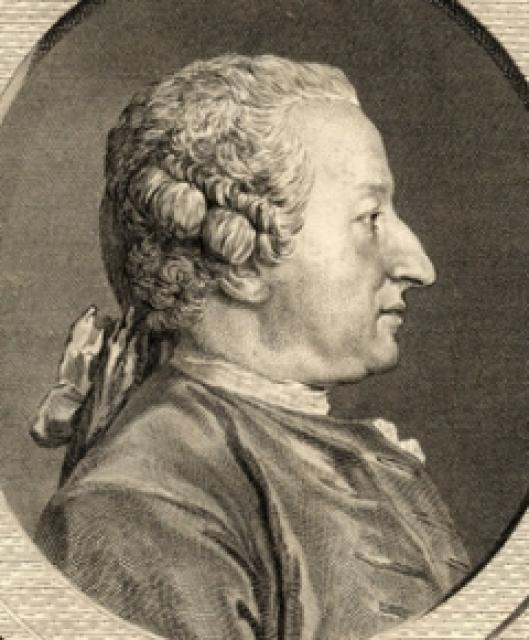
Early Life and Mathematical ProwessAlexis Claude Clairaut was born in Paris to a mathematics professor. Exhibiting exceptional talent from a tender age, he astounded the Paris Academy of Sciences at the age of twelve with his remarkable work on quartic curves. After passing a thorough examination to verify his authorship, Clairaut was hailed as a prodigy.
Contributions to Geometry
In 1729, the 16-year-old Clairaut presented another treatise to the Academy, titled "Studies on Curves of Double Curvature." This groundbreaking work laid the foundation for three distinct geometric disciplines: analytic geometry in space, differential geometry, and descriptive geometry.
Influence of Pierre Louis de Maupertuis
Clairaut's exceptional abilities drew the attention of Pierre Louis de Maupertuis, who became his mentor. Maupertuis took Clairaut to Basel to study under Johann Bernoulli. Upon returning to Paris in 1731, the 18-year-old Clairaut made history as the youngest person to be elected an adjunct member of the Paris Academy.
Geodetic Expeditions and the Shape of the Earth
To resolve the debate regarding the shape of the Earth, the Academy organized expeditions to Peru and Lapland in 1735-1737. Clairaut participated in the Lapland expedition alongside Maupertuis. The measurements confirmed Newton's theory that the Earth is flattened at the poles, with a flattening coefficient of 1/298.25 (according to modern data). Clairaut later authored the influential monograph "Theory of the Figure of the Earth Derived from the Principles of Hydrostatics."
Mathematical Discoveries
Clairaut made significant contributions to mathematical analysis, introducing the concepts of the curvilinear integral (1743), the total differential, and the general and particular solutions of first-order differential equations (1736).
Celestial Mechanics and the Lunar Problem
Clairaut's work in celestial mechanics focused primarily on the Moon's motion. He discovered an ingenious method for approximating the solution to the "three-body problem." His revised calculations closely matched observational data, earning him the prestigious prize of the Petersburg Academy of Sciences in 1751.
Prediction of Halley's Comet
Clairaut successfully predicted the return of Halley's Comet in 1759, adjusting its predicted arrival date by a mere 31 days. His calculations accounted for the gravitational influence of Jupiter and Saturn.
Geodesy and Gravimetrics
Clairaut's contributions to geodesy included the "Theorem of Clairaut," which established a relationship between gravity and Earth's flattening. This theorem allowed for the determination of Earth's flattening without relying on direct measurements. By studying the oscillation of pendulums at different latitudes, Clairaut laid the foundation for the science of gravimetrics.
Other Contributions
Clairaut's authorship extended to algebra and geometry textbooks, further solidifying his legacy as a gifted educator. His defense of Newtonian mechanics played a crucial role in its acceptance on the European continent.
Legacy
Alexis Claude Clairaut died unexpectedly in Paris in 1765 at the age of 52. His brilliance and contributions left an enduring mark on mathematics, astronomy, and geodesy. His discoveries and theories have inspired generations of scientists and continue to shape our understanding of the world.