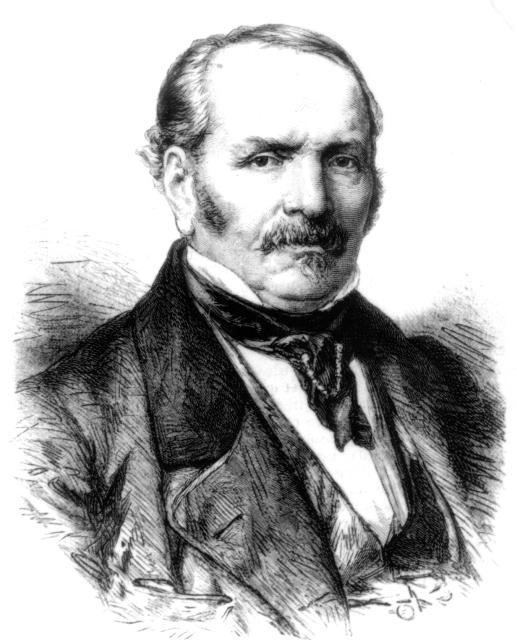
Allan Kardec
 France
- Biography of Allan Kardec
- Early Life and Education
- Teaching Career and Recognition
- The Emergence of Spiritism
- Contributions to Spiritism
- Legacy and Influence
Biography of Allan Kardec
Allan Kardec, a French teacher and spiritualist, was the creative pseudonym of the French educator and philosopher Hippolyte Léon Denisart-Rivail. He is primarily known as the "systematizer of Spiritism" thanks to his five books, which are considered classics of Spiritism today. Interestingly, this French educator, a man of science who wrote numerous textbooks on mathematics and French grammar, became so captivated by spiritualistic séances that he is now remembered as one of the founders of Spiritism.
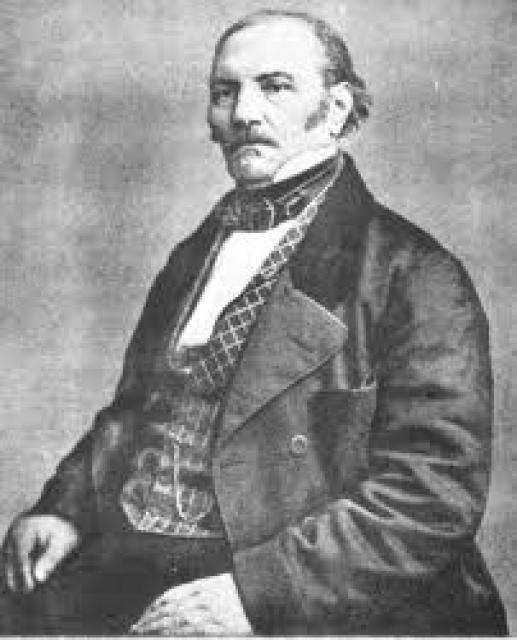
Early Life and Education
Rivail was born on October 3, 1804, in Lyon, France, and was raised in the Catholic faith. His father was a lawyer. Until the age of ten, Hippolyte attended a local primary school. However, when Napoleonic France faced upheaval from the united forces of Europe, his affluent parents sent him abroad for further education. Rivail ended up in the chateau of Yverdon, located on the shores of Lake Neuchâtel, where Johann Heinrich Pestalozzi, a prominent Swiss pedagogue and one of the founders of modern educational theory, resided. At Pestalozzi's school, Rivail met and befriended young men from other European countries, which allowed him to acquire knowledge of several languages, including English, German, and Dutch.
Teaching Career and Recognition
Rivail possessed extensive knowledge and taught mathematics, physics, chemistry, astronomy, physiology, comparative anatomy, and French language upon his return to Paris. In 1824, he opened his own school based on Pestalozzi's principles. Rivail published numerous books on pedagogy and was awarded by the Royal Academy of Arras in 1828 for his research on educational reforms. In February 1832, he married Amélie Gabrielle Boudet, a teacher who worked with him at the school. When the school closed due to financial difficulties, Rivail earned a living through translations from German and also authored and published several textbooks. Additionally, Rivail organized and conducted free classes for the less privileged segments of society.
The Emergence of Spiritism
Rivail became fascinated with Spiritism later in life. In May 1855, he attended a séance where, according to his own account, he witnessed the table turning under the influence of spirits. The trend of Spiritism emerged in Europe from the United States and quickly captivated minds across all levels of society, including the upper class. It was during this time that Rivail adopted the pseudonym Allan Kardec. He believed that he bore this name in a previous life, during which he was a druid. This information was revealed to Rivail by a spirit named Zephyrus. The pseudonym allowed him to continue writing "serious" books on pedagogy under his real name while simultaneously publishing works on the supernatural.
Contributions to Spiritism
As a teacher lacking a formal scientific background (Rivail never attended university), he decided to conduct his own research on spiritistic phenomena. Since he was not a medium himself, Rivail developed a list of questions and began working with other mediums and so-called "conduits" to establish communication with spirits. Soon, the quality of contact with the spirit world improved significantly, and the information Rivail "discovered" formed the basis of his works: "The Spirits' Book" (1857), "The Mediums' Book" (1861), "The Gospel According to Spiritism" (1864), "Heaven and Hell" (1865), and "The Genesis" (1868) – all of which continue to be reprinted to this day. Until his death, Rivail, under the guise of Kardec, headed the French Spiritist Association and published the journal "Spiritist Review," which is still in circulation today.
Legacy and Influence
Allan Kardec died on March 31, 1869, from an aneurysm and was buried in the famous Père-Lachaise Cemetery in Paris. Interestingly, Kardec's works have had a tremendous impact on the cultural and spiritual life of a country as distant from France as Brazil. He is one of the most widely read French authors in Brazil, where over six million Spiritists account for more than thirty million copies of his books sold. Major cities in Brazil have streets named after Allan Kardec, as well as cultural centers, libraries, and elementary schools, not to mention hundreds of Spiritist centers worldwide.


