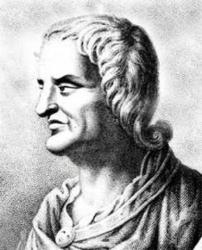
Ambrose Philips
 Great Britain
Biography of Ambrose Philips
Ambrose Philips was an English poet and political activist. He was born in Shropshire, to a family originally from Leicestershire. He received his higher education at St John's College, Cambridge. Philips spent most of his life in Cambridge until 1708, during which time he likely created most of his pastoral poems. He worked for the bookseller Jacob Tonson, and his pastorals were included in one of Tonson's volumes of 'Miscellanies' alongside the works of Alexander Pope. Throughout his life, Philips was a staunch supporter of the Whig Party, and he had friendships with Richard Steele and Joseph Addison.
Recognition and Criticism
In 1713, 'The Guardian' published three highly praising reviews of Philips' work, calling him the worthy successor to Edmund Spenser. These articles were likely written by Thomas Tickell, who purposely avoided mentioning Philips' notable competitor, Alexander Pope. Joseph Addison also praised Philips' elegant simplicity in his publication 'The Spectator.' However, Pope eventually responded to the excessive praise for Philips by anonymously publishing a critical article in 'The Guardian,' comparing his own pastorals to Philips' and deliberately belittling himself. This deeply offended Philips, who expressed his desire to punish Pope for his audacity.
A Continuous Rivalry
Pope was not intimidated by Philips' threats and, at his request, the playwright John Gay wrote a parody of Philips' works. However, the result was unexpectedly another round of praise rather than a biting satire. This rivalry between Philips and Pope continued with a constant exchange of pranks and challenges, as noted later by Samuel Johnson.
Later Life and Works
In 1718, Philips established a new Whig Party newspaper called 'The Free-Thinker,' working alongside the clergyman Hugh Boulter. Philips initially served as a magistrate but later became Boulter's secretary when he became Archbishop. From 1727 to 1749, Philips served in the Irish House of Commons as the representative of Armagh Borough. In 1726, he became the Secretary to the Lord Chancellor, and in 1733, he became a judge. In 1742, Philips' patron passed away, and six years later, he returned to London where he died in 1749.
Legacy
Among Philips' works, his pastorals and epistolary poems were most popular during his time. One of his notable epistles was sent to the Earl of Dorset, describing a beautiful winter scene in Copenhagen. Some of Philips' poetic works have survived to the present day, including two simple yet endearing excerpts written for the young son of Lord Carteret. Additionally, Philips was involved in translations, particularly of classical poets such as Sappho, Anacreon, and Pindar.