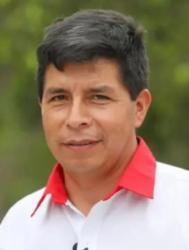
Andrzej Milczanowski
 Poland
- Childhood and Family Background
- Education and Legal Career
- Trade Union Activism and Leadership
- Resistance to Martial Law
- Imprisonment and Underground Resistance
- Second Wave of Protests
- Post-Solidarity Era and Retirement
- Recognition and Legacy
Childhood and Family Background
Andrzej Milczanowski was born into a family with a legal background. His father, Stanisław, played a part in political trials, including those against communists. After the annexation of Western Ukraine by the USSR, Milczanowski Sr. was apprehended, sentenced, and executed by the NKVD, with the involvement of a Polish communist. Andrzej's mother, Wilhelmina Milczanowska, relocated to the village of Kozychy with her children, concealed their background, and worked as a teacher. Following the war, she and her children were repatriated to Poland.
Education and Legal Career
During the "Gomulka Thaw," Milczanowski enrolled in Adam Mickiewicz University in Poznań. He graduated from the law faculty in 1962 and was assigned to a district prosecutor's office in the Szczecin Voivodeship. From 1968 onward, he worked as a legal advisor in agricultural businesses and for the Szczecin Voivodeship transport company (WPKM). Despite adhering to anti-communist views, he collaborated with the clandestine Committee for Social Defense (KOS-KOR) from 1978 onwards.
Trade Union Activism and Leadership
In August 1980, Milczanowski actively joined the strike movement. He served on the WPKM strike committee and edited the bulletin "Tramwajarz." He became a member of the presidium and head of the legal group of the Szczecin (Western Pomeranian) Solidarity Trade Union Center and the trade union committee of the Szczecin Warski Shipyard. He represented Szczecin at the 1st Solidarity National Congress in September-October 1981.
Resistance to Martial Law
On December 13, 1981, martial law was imposed in Poland. Thousands of Solidarity activists, including Szczecin leaders Marian Jurczyk, Stanisław Wondołowski, Jerzy Zimowski, Artur Bałazs, Andrzej Tarnowski, and Stanisław Kocian, were subjected to repression and internment. However, Szczecin emerged as a major center of resistance.
The strike at the Warski Shipyard was led by the Regional Strike Committee (RKS), chaired by engineer-technologist Mieczysław Ustasiak. Milczanowski, as his deputy, gradually assumed operational leadership, organizing internal operations, external defense, and conveying instructions. The authorities deployed not only police and riot squads (ZOMO) but also an army motorized rifle division and landing barges. Despite attempts by the military to discredit him as a former prosecutor involved in death sentences (which was untrue), Milczanowski maintained a peaceful stance and urged strikers to avoid violence.
Imprisonment and Underground Resistance
Milczanowski was arrested and imprisoned in Szczecin, Inowrocław, and Bydgoszcz. In March 1982, he was sentenced to five years' imprisonment. During his incarceration, he initiated a ten-day hunger strike to protest the mistreatment of inmates. Following an amnesty in 1983, his sentence was reduced to two years and four months, and he was released on April 17, 1984. Notably, Milczanowski was the only PNR prisoner to be personally met by Lech Wałęsa upon his release.
Upon his release, Milczanowski immediately joined the underground Solidarity structures. He played a central role in re-establishing Solidarity in Szczecin. He initiated the creation of the Western Pomeranian Solidarity Coordinating Council and served on the national Temporary Coordinating Commission.
Second Wave of Protests
In the spring and autumn of 1988, Poland witnessed a new wave of mass strikes. Milczanowski once again led the strike at WPKM and joined the strike committee of the Szczecin port. He emerged as a leading figure, overshadowing Jurczyk, who remained steadfast to specific Solidarity structures.
Post-Solidarity Era and Retirement
Milczanowski returned to private legal practice. However, he remained committed to Solidarity traditions and Wałęsa while also advocating for the professional interests of police and secret service personnel. He defended retired officers accused of human rights violations during martial law, sparking controversy among his former opposition colleagues.
Milczanowski's departure from the Lech Wałęsa Institute's supervisory board was a notable event. He has since publicly expressed regrets over his testimony on behalf of a retired general accused of involvement in the internment of Solidarity activists. Milczanowski maintained a positive view of Wałęsa as a symbol of the liberation movement.
Recognition and Legacy
Despite his controversial stances, Milczanowski is respected and admired in Poland, particularly among Solidarity and police veterans. He passed away on July 23, 2024, at the age of 85.