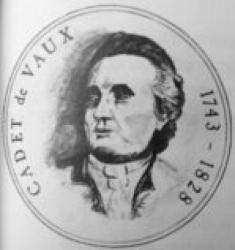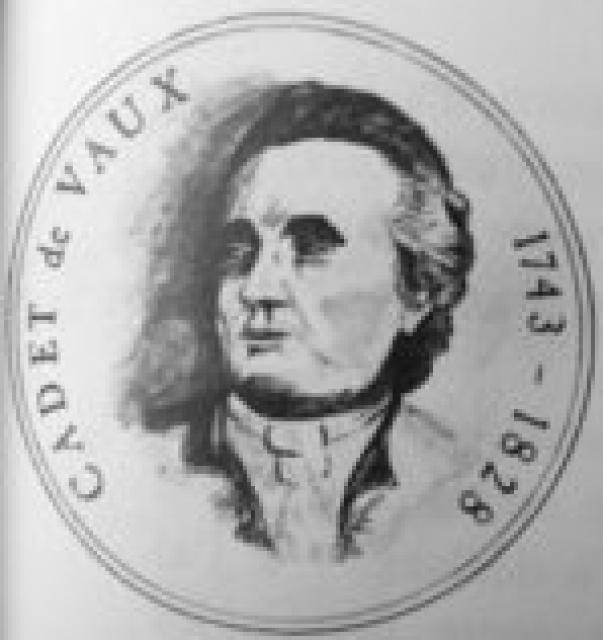
Antoine-Alexis Cadet de Vaux
 France
- Pharmacy, chemistry and journalism
- Food, bread and agricultural science
- Public health and urban reform
- A legacy of applied knowledge
Antoine-Alexis Cadet de Vaux was a French pharmacist, chemist and public-health reformer whose interests ranged from bread and wine to sanitation and agricultural improvement. In an age when practical knowledge could be difficult to reach beyond learned circles, he became a tireless popularizer, using journalism and public instruction to bring scientific ideas into everyday life. His work joined laboratory curiosity with a belief that better knowledge could improve health and living conditions.
Pharmacy, chemistry and journalism
Born in Paris in 1743, Cadet de Vaux trained as an apothecary and acquired a pharmacy in the city. He later served in pharmacy roles connected with the Hôtel des Invalides and Val-de-Grâce. His work brought him into contact with questions of medicine, food quality and hygiene, all fields where practical chemistry could make a difference.
In 1777, he helped found the *Journal de Paris*, one of the earliest daily newspapers in France. The newspaper gave him a platform to explain scientific and civic questions to a broad readership. He used it to promote ideas about nutrition, public health and urban conditions, building a reputation not only as a chemist but as a writer and advocate for social improvement.
Food, bread and agricultural science
Cadet de Vaux worked closely with Antoine-Augustin Parmentier, the chemist and nutrition reformer best known for promoting the potato in France. In 1782, the two helped establish a school of breadmaking in Paris, intended to improve the quality and reliability of baking. Their collaboration brought scientific principles into a trade essential to public welfare.
His writing covered a wide field of food and agricultural topics: wine production, coffee, potatoes, gelatin, sugar from beets, tobacco and crop preservation. He sought ways to make food production more efficient and to reduce the risks of scarcity. He was also associated with agricultural societies and helped spread practical innovations among farmers and landowners.
Public health and urban reform
Cadet de Vaux’s concern for health extended to the conditions of city life. As an inspector of public cleanliness, he addressed dangerous cesspools and the hazards faced by workers who had to clean them. He also advocated for measures to improve hospitals and prisons and supported moving cemeteries away from densely populated parts of Paris.
These campaigns connected his scientific work to broader social reforms. He believed that observation and experiment should inform policy, and that municipal authorities had a responsibility to protect people from preventable illness. His writings on sanitation and housing after floods reflected this practical approach to public health.
A legacy of applied knowledge
Cadet de Vaux continued writing and working in scientific and agricultural circles into old age. He died at Nogent-sur-Oise on June 29, 1828. His range of interests may seem unusually broad by modern standards, but it reflected a period when chemistry, medicine, agriculture and public administration were closely linked.
His lasting contribution was not a single discovery, but a career devoted to applying knowledge to common needs. Through journalism, education and reform, he helped make better food, safer cities and more informed agricultural practice part of public discussion in France.