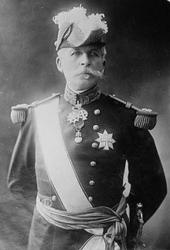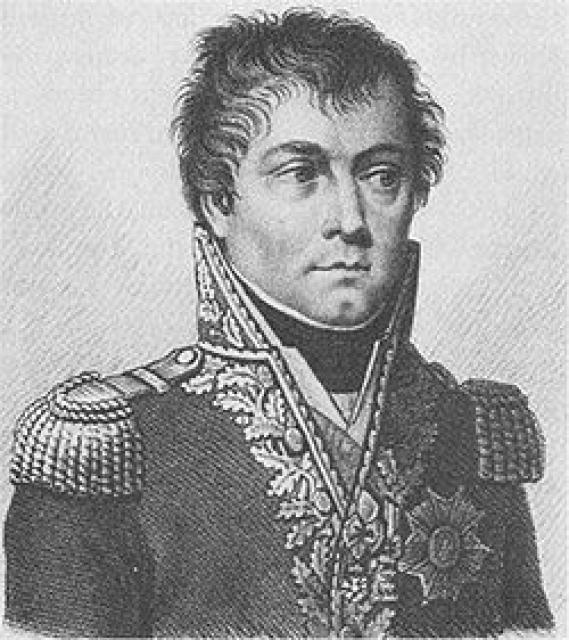
Antoine Francois Andreossy
 France
- Early Military Career and the Italian Campaign
- The Egyptian Expedition and Diplomatic Missions
- Restoration and Later Years
- Scientific Contributions
- Family Life
Antoine Francois Andreossy: A Napoleonic General of Science and Diplomacy
Born in Castelanau-dary on March 6, 1761, Antoine Francois Andreossy was a French general, scientist, and diplomat during the Napoleonic era. The great-grandson of Francois Andreossy, who played a role in the construction of the Languedoc Canal, Andreossy received his military education at the Metz Academy and joined the artillery as a lieutenant in 1781.
Early Military Career and the Italian Campaign
During the Dutch campaign of 1787, Andreossy was captured but quickly released. Promoted to captain in 1788, he joined the Rhine Army in 1794 before transferring to the Italian Army. Andreossy distinguished himself in the Italian campaign, earning command of an artillery battalion on March 27, 1795. He played a notable role in the Alpine campaign and became a brigade commander on December 6, 1796.
The Egyptian Expedition and Diplomatic Missions
In 1798, Andreossy accompanied Napoleon on his Egyptian expedition as commander of the pontoon brigades. His scientific abilities were evident in his exploration of Lake Manzala. After returning to France with Bonaparte, he was instrumental in the coup d'etat of 18 Brumaire and promoted to divisional general. Andreossy's diplomatic career took him to London (1800), Vienna (1806), and Constantinople (1812), where he gained renown for his activities on behalf of France as well as his scholarly research.
Restoration and Later Years
Upon the restoration of the Bourbons, Andreossy was recalled, but he returned to military service after Napoleon's return from Elba. He was a member of the commission sent to meet allied forces after the Battle of Waterloo. In 1824, Andreossy was elected to the French Academy of Sciences. He died in Montauban on September 10, 1828, and his name was inscribed on the Arc de Triomphe in Paris.
Scientific Contributions
Andreossy's most significant writings include his memoirs on Egypt ("Memoires sur l'Epypte") and his studies on the flooding of the Black Sea into the Mediterranean ("Memoires sur l'irruption du Pont-Euxin dans la Mediterranee"). His works on the water systems of Constantinople and the region's physical geography were also notable contributions to science.
Family Life
Andreossy married Marie Florimonde Stephanie de Fay on September 15, 1810. Their only son, Etienne Auguste, displayed promise as a military officer but died in a riding accident in 1835.