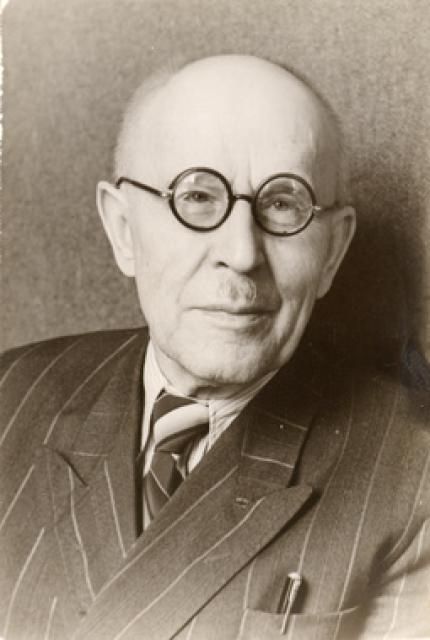
Apollinaris Bondartsev
- Alexei Sergeyevich Bondartsev: A Pioneer in Mycology
- Early Career and Fungal Discoveries
- Contribution to Systematic Mycology
- Wartime and Postwar Period
- Fungal Determinations and Color Descriptions
- Publications and Legacy
Alexei Sergeyevich Bondartsev: A Pioneer in Mycology
Early Life and EducationBorn in 1898 in Kursk, Alexei Sergeyevich Bondartsev initially pursued agricultural studies at the Riga Polytechnic Institute (1898-1903). Under the mentorship of botanist and mycologist Fyodor Vladimirovich Buchholz, he delved into the realm of mycology, shaping his future research path.
Early Career and Fungal Discoveries
After graduating, Bondartsev worked as an agronomist until joining the Central Phytopathological Station (CPS) in St. Petersburg in 1905. During his tenure at CPS, he authored the first Russian textbook on phytopathology, which saw multiple editions. He also discovered and described over 130 new fungal taxa, including over 30 species of myxomycetes and deuteromycetes.
Contribution to Systematic Mycology
In 1913, Bondartsev became the head of the newly established Department of Phytopathology at CPS. He devoted himself to studying polypores, becoming the first in Russia to systematically investigate these fungi. In collaboration with Rolf Singer, he developed a progressive system for classifying polypores, revolutionizing the field of basidiomycete systematics.
Wartime and Postwar Period
During the siege of Leningrad (1941-1944), Bondartsev endured severe hardships. Nonetheless, his research continued, culminating in his seminal monograph, "Polypores of the European Part of the USSR and the Caucasus" (1953). This comprehensive work, later translated into English, established his legacy as one of the foremost experts on basidiomycetes.
Fungal Determinations and Color Descriptions
Bondartsev's practical contributions extended beyond taxonomy. His methodology for collecting and preserving fungi, developed in collaboration with Singer, simplified the process of herbarium curation. He also created a widely used color chart for accurately describing the fruiting bodies of fungi.
Publications and Legacy
Throughout his prolific career, Bondartsev authored over 200 scientific works and countless articles. His writings, characterized by meticulous observations and analytical insights, have inspired generations of mycologists. In recognition of his pioneering contributions, the book "European Polypores" (1993) was dedicated to Bondartsev and other renowned mycologists.




