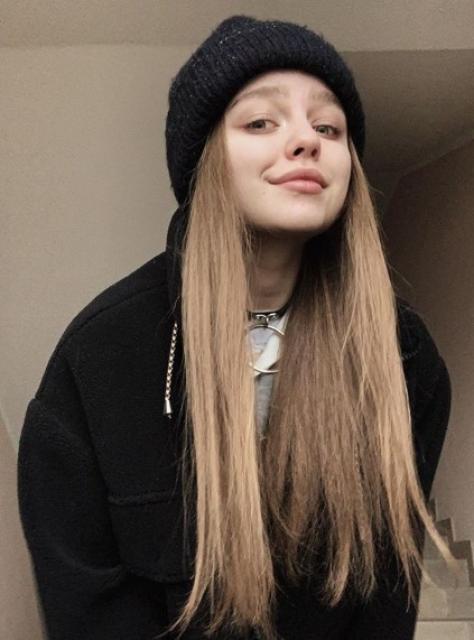
Arkusha
 Belarus
Arkusha built her audience online before turning that attention into a steady music career. The Belarusian singer and creator first drew followers with a visual social-media presence, then began releasing her own pop tracks as a teenager. Her path from image-led blogging to a growing digital discography has kept her connected to the same internet audience that introduced her to listeners.
Early Online Following
Born in Minsk on June 1, 2003, Anastasia Leontyuk began posting on social media while still young. Her early profile leaned on carefully composed photographs and an air of mystery; for a time, she shared images without showing her face. The posts helped her attract followers and build a recognizable online persona as a model and blogger.
Rather than keeping that attention confined to photos, she began sharing music. In 2019, at 16, she opened a VK community for her songs and introduced early tracks including “Meteozavisimost,” “Verkh egoizma” and “Propast.” Listeners began making covers and sharing them online, giving her first releases a life beyond her own page.
From Blogger to Recording Artist
Arkusha has continued to balance social-media work with songwriting and recording. Her catalog grew from the early releases into a stream of singles across the 2020s, including “Ne ty,” “Krasnaya pomada” and “Bablo.” She has used social platforms as a direct way to present new music and keep in touch with listeners, maintaining the close audience connection that first helped her gain attention.
Her releases show an artist continuing to test pop styles and moods rather than settling into a single format. In 2025, she issued the six-track project BLONDY PHONK and singles such as “Na tusovkakh.” New singles continued to appear in 2026, including “Nenormalnaya,” “Raznye” and “Berezhnо,” reflecting a consistent release schedule.
A Public Image in Motion
Arkusha’s identity as a performer has grown alongside her online persona. Early coverage described her as a blogger, photographer, model and singer, while her current music activity makes clear that recording remains a central part of her work. She has also spoken in interviews about the challenges of school bullying and family relationships, offering some personal perspective without making her private life the main focus of her public profile.
Her career illustrates how a digital following can become a launchpad for independent pop music. Arkusha began with photos and short posts, but steadily gave her audience songs to follow as well. By keeping her music and online presence closely linked, she has shaped a career that moves fluidly between creator culture and the recording studio.