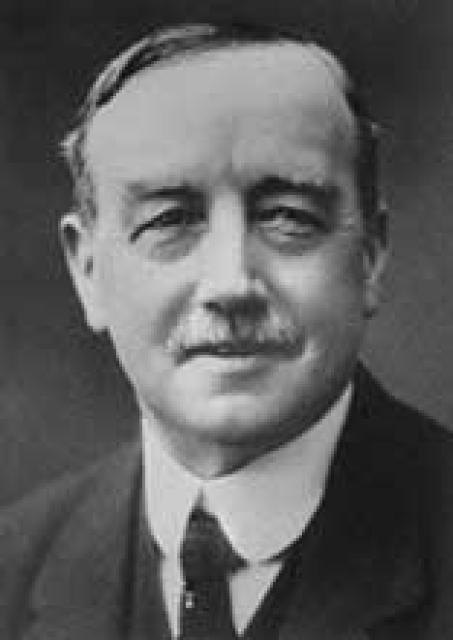
Arthur Henderson
 Great Britain
- Early Life and Career
- Political Rise
- Leadership and Wartime Service
- International Diplomacy
- Foreign Secretary and Nobel Prize
- Later Years and Legacy
Early Life and Career
Arthur Henderson was born into a poor family in Scotland and was forced to leave school at a young age to work as a photographer's assistant. After his mother's remarriage, he resumed his education and became an apprentice ironworker at age 12. By 18, he was a skilled worker and joined the Ironfounders' Union. His experiences as a factory worker, lay Methodist preacher, and member of the Tyneside Debating Club laid the foundation for his future political career.
Political Rise
In 1892, Henderson was elected as a city councilor, and in 1896, he joined the Durham County Council. In 1903, he became the first Labour mayor of Darlington. Throughout his life, Henderson dedicated himself to organizing the British labor movement. He helped establish the Labour Representation Committee (LRC) at the Socialist and Trades Union Conference in 1900, which later formed the basis of the Labour Party. With LRC support, he won a parliamentary seat in 1903 and played a key role in establishing the Labour Party in 1906.
Leadership and Wartime Service
Henderson served as the leader of the Labour Party from 1911 to 1934. During World War I, he supported Britain's entry and became the Labour Party's chairman when Ramsay MacDonald resigned in protest. In 1915, he joined Herbert Asquith's coalition government as President of the Board of Education, and a year later, he became the first Labour member of the Cabinet as Chancellor of the Exchequer.
International Diplomacy
After the war, Henderson visited Russia in 1917 and proposed a British delegation to the Stockholm International Socialist Congress. However, his plan was rejected, and he resigned from the Cabinet. In 1923, he chaired the Socialist Workers' International in Hamburg. In 1924, he entered Ramsay MacDonald's first Labour government as Home Secretary, focusing primarily on international affairs.
Foreign Secretary and Nobel Prize
From 1929 to 1931, Henderson served as Foreign Secretary. During his tenure, he restored diplomatic relations with Russia, negotiated the Dawes Plan for German reparations, and facilitated the signing of the Geneva Protocol, which established international arbitration for disputes. He was awarded the Nobel Peace Prize in 1934 for his efforts to promote disarmament and international cooperation.
Later Years and Legacy
Despite his efforts, the Great Depression and Nazi Germany's withdrawal from the World Disarmament Conference doomed the conference to failure. However, Henderson remained a staunch advocate for international peace and arbitration. His works include "Labour's Foreign Policy" (1933) and "Labour's Way to Peace" (1935).