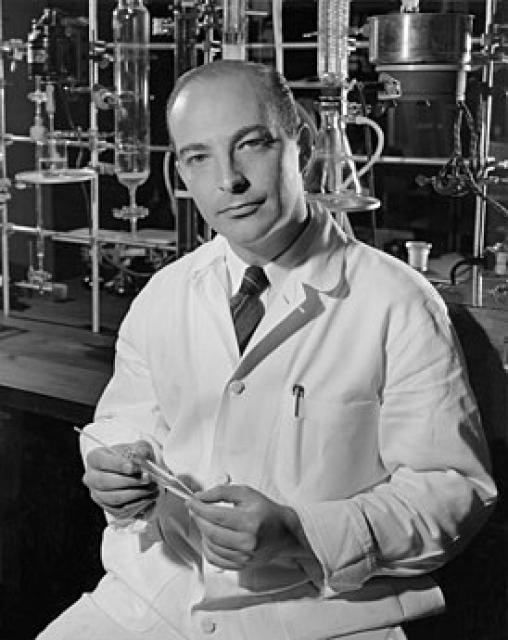
Arthur Kornberg
 USA
USABiography of Arthur Kornberg
Arthur Kornberg was an American biochemist who was awarded the Nobel Prize in Physiology or Medicine in 1959. He received this prestigious honor, along with Severo Ochoa, for their discovery of the mechanism of nucleic acid synthesis.
Kornberg completed his studies at City College in New York and the University of Rochester. In 1942, he served as a medical officer in the United States Coast Guard. From 1942 to 1952, he worked at the National Institutes of Health in Bethesda. In 1947, he spent a year as a visiting researcher in Severo Ochoa's laboratory at the New York University School of Medicine.
From 1953 to 1959, Kornberg served as the head of the Microbiology Department at Washington University in St. Louis, Montana. In 1959, he became a professor at the Stanford University School of Medicine and also served as the dean of the faculty until 1969.
Kornberg's early research focused on the intermediates of metabolism and the enzymes involved in their formation. These investigations led to the discovery of the chemical reactions responsible for the synthesis of flavin adenine dinucleotide and uridine diphosphate glucose, which are coenzymes involved in cellular redox processes.
During his studies on nucleotide synthesis, Kornberg delved into the problem of nucleotide polymerization, the process by which nucleotides are connected to form DNA and RNA. He isolated and purified an enzyme now known as DNA polymerase, which catalyzes the replication of DNA during cell division. Using natural DNA as a template, Kornberg successfully synthesized functionally active DNA in vitro for the first time.
Arthur Kornberg's groundbreaking work in the field of biochemistry and his contributions to our understanding of nucleic acid synthesis have had a profound impact on the scientific community. His research continues to inspire and advance the field of molecular biology.


