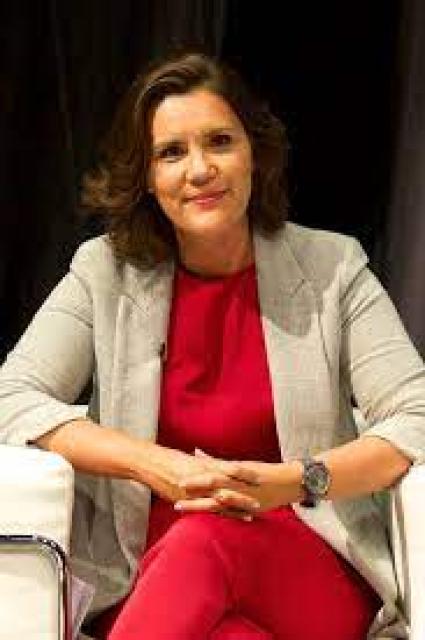
Assuncao Cristas
 Portugal
- Early Life and Education
- Legal Career
- Entry into Politics
- Minister of Agriculture and the Sea
- Chairperson of the PSD-PP
- Electoral Setbacks and Resignation
- Family and Personal Life
Early Life and Education
Maria da Assunção Esteves dos Reis Tavares da Costa Cristaswas born on August 17, 1964, in Huambo, colonial Angola, into a family of Portuguese settlers. Her father, owner of a coffee plantation, and her mother, a doctor, instilled in Maria a strong sense of Portuguese patriotism and anti-communism.
After Angola's independence in 1975, the Cristas family returned to Portugal amidst political turmoil. Raised in a fervently conservative and Catholic environment, Maria initially did not aspire to a political career. However, she graduated with a Law degree from the Faculty of Law at the University of Lisbon in 1997, where one of her professors was future president Marcelo Rebelo de Sousa.
Legal Career
Cristas began her legal career as an assistant at the Faculty of Law in 1995. She became a member of the Portuguese Bar Association in 1999 and served as an advisor to the Minister of Justice, Maria Celeste Cardona, from 2002 to 2004. She also headed the Ministry's Department of Legislative Planning from 2005 to 2007.
Entry into Politics
Cristas's strong conservative and Christian-democratic views, coupled with her vocal opposition to abortion, drew the attention of Paulo Portas, leader of the Social Democratic Center - People's Party (PSD-PP). In 2009, she joined the party and ran as a candidate in the parliamentary elections, securing a seat in the Portuguese parliament. She was re-elected in 2011.
Minister of Agriculture and the Sea
After the formation of a coalition government between the PSD and the PSD-PP, Cristas was appointed Minister of Agriculture and the Sea in 2011. Her tenure was marked by controversies and sharp criticism, but she also demonstrated a strong determination and commitment to conservative principles.
Known for her impulsive decisions, Cristas faced criticism from both political opponents and party members. She restricted the use of electronic devices in the ministry, citing ecological concerns, and liquidated Parque Expo, a management company responsible for Lisbon's Parque das Nações.
Chairperson of the PSD-PP
In 2016, Cristas became the first woman to lead a Portuguese conservative party when she was elected Chairperson of the PSD-PP at the party's congress. Her election was not without challenges, as the party's right wing had objections. However, Cristas's support from Portas and his allies helped secure her victory.
As Chairperson, Cristas aimed to balance traditional Christian-democratic principles with effective political management. She met with former party leaders and worked to consolidate the party's 40-year tradition.
Electoral Setbacks and Resignation
Under Cristas's leadership, the PSD-PP suffered significant losses in the 2019 parliamentary elections. Acknowledging the party's poor performance, she announced her resignation as Chairperson. In 2020, Francisco Rodrigues dos Santos was elected to lead the party, marking a shift towards a more conservative political course.
Family and Personal Life
Cristas is married and has four children. She became the first pregnant woman to hold a ministerial position in Portugal in 2013. A devout Catholic, she emphasizes her religious beliefs and credits her husband for providing essential support in her career.
Known for her courage and determination, Cristas values spending time with her family and enjoys swimming and running. Her family life often receives public attention with her consent.