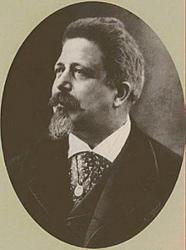
Astolf Custine
 France
- Astolphe de Custine: A French Monarchist and Literary Traveler
- Journey to Russia
- "Russia in 1839"
- Controversy and Censorship
- Mixed Reception
- Later Years and Legacy
Astolphe de Custine: A French Monarchist and Literary Traveler
Early Life and FamilyAstolphe de Custine, born on March 18, 1790, in Niederwiller, Lorraine, France, came from a noble family with deep military connections. However, his grandfather and father both met their tragic end during the French Revolution, instilling in young Custine a profound aversion to tyranny.
Journey to Russia
In 1839, at the invitation of Tsar Nicholas I, Custine embarked on a journey to Russia. As a devout monarchist and a seasoned travel writer, he was keen on observing the country's political and social landscape.
"Russia in 1839"
Custine's extensive experiences in Russia culminated in his groundbreaking book, "Russia in 1839." Published in France in 1843, this work became a controversial bestseller across Europe.
In the book, Custine painted an unflattering portrait of Russia as a land of "barbarians" and slaves, where fear permeated society and "bureaucratic tyranny" reigned supreme. He famously quipped, "However vast this empire might be, it is nothing more than a prison, with the emperor holding the key."
Controversy and Censorship
Custine's candid observations ignited the wrath of Tsar Nicholas I and triggered a barrage of official rebuttals. The book was effectively banned in Russia, with the first abridged Russian edition only appearing in 1930. A full translation emerged in 1996, revealing a more nuanced perspective often obscured by previous distortions.
Mixed Reception
Russian intellectuals' responses to "Russia in 1839" were varied. While some embraced it as an insightful critique, others dismissed it as biased and sensationalist. Nevertheless, Custine's work remains a valuable record of a foreigner's observations on a pivotal period in Russian history.
Later Years and Legacy
After his Russian expedition, Custine continued his literary pursuits, producing works on Italian, Spanish, and Middle Eastern societies. He died in Saint-Gratien, France, on September 25, 1857, leaving behind a legacy as a fearless observer and a staunch advocate for liberty.
Despite the passage of time, Custine's writings continue to spark debate and inspire those seeking a deeper understanding of Russian society and the human condition. By providing an outsider's perspective, he offered invaluable insights into the complexities of a nation that has captivated and bewildered countless observers throughout history.