Auguste Beernaert
 Belgium
- Background and Education
- Legal Career and Entry into Politics
- Minister and Prime Minister
- International Advocate for Peace
- Nobel Peace Prize and Later Years
- Personal Life and Legacy
Background and Education
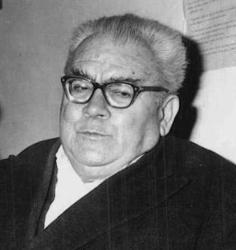
Auguste Marie François Beernaert, Belgium's 14th Prime Minister and Nobel Peace Prize laureate, was born into a wealthy Flemish Catholic family in Ostend. His father's relocation to Namur as a civil servant brought the family among the town's elite.
Growing up in a home with servants, Beernaert's early education was conducted by private tutors and his intellectually inquisitive mother. Her influence instilled in him a love of knowledge and a relentless work ethic. In 1846, he entered university and received his law degree five years later.
Legal Career and Entry into Politics
Beernaert's studies extended to France and Germany, where he analyzed legal education systems. His report on the subject, presented to the Belgian Ministry of the Interior in 1853, gained him recognition.
Entering the bar in 1853, Beernaert worked at the Brussels Court of Appeals under Hubert Dolez. The renowned advocate became a significant mentor. After completing his bar exam, Beernaert established himself as a leading lawyer specializing in taxation. His imposing presence and incisive arguments commanded attention in court.
In 1873, Prime Minister Jules Malou, head of the ultra-conservative Catholic Party, offered Beernaert the position of Minister of Public Works. This choice faced criticism from liberals and within Malou's own party.
As Belgian law required ministers to be elected members of parliament, Beernaert ran for office. Defeated in Soignies, he was elected for the district of Thielt in West Flanders. He would remain a parliamentarian until his death in 1912.
Minister and Prime Minister
As Minister of Public Works, Beernaert improved the country's roads and canals. He modernized ports in Ostend and Antwerp and sought to abolish child labor in mines.
After the Catholic Party's electoral loss in 1878, Beernaert became Minister of Agriculture, Industry, and Public Works when Malou returned to power in 1884. However, King Leopold II's dismissal of Malou led to Beernaert's resignation.
Three days later, the King offered Beernaert the premiership and finance portfolio, which he accepted with Malou's approval. Proving a capable politician, Beernaert secured parliamentary recognition of Leopold II's authority in the Congo Free State in 1885. He also introduced labor laws, balanced the budget, and extended voting rights to all citizens over 25.
A failed proportional representation bill in 1894 prompted Beernaert's resignation. He was made a minister of state in recognition of his contributions. In 1895, his colleagues elected him President of the Chamber of Representatives.
International Advocate for Peace
Amidst his domestic responsibilities, Beernaert became increasingly involved in international affairs, particularly those concerning peace. In 1896, he joined the Inter-Parliamentary Union, founded to emphasize arbitration over war. He chaired the Union's conferences in 1897, 1905, and 1910.
Following the establishment of the Inter-Parliamentary Council in 1899, Beernaert became its chairman. He oversaw the executive committee and bureau until his death. In the twilight of his life, he tirelessly worked to halt the arms race and convince nations to pursue peaceful resolutions.
Nobel Peace Prize and Later Years
At the 1899 Hague Peace Conference, Beernaert presided over the first commission on disarmament. He became a member of the Permanent Court of Arbitration in The Hague, represented Mexico in a dispute with the United States in 1902, and helped draft international maritime law codes.
Beernaert's pursuit of disarmament brought him into conflict with King Leopold, who favored increased military spending to protect Belgian neutrality. Undeterred, Beernaert asserted, "Of all political virtues, the first and the condition of all others is perseverance."
In 1909, Beernaert was awarded the Nobel Peace Prize, which he shared with Paul d'Estournelles de Constant. Neither laureate attended the ceremony or delivered acceptance speeches.
Beernaert remained preoccupied with the development of military aviation, proposing a ban on aerial warfare at the 1912 Inter-Parliamentary Union conference in Geneva. Despite initial opposition, he persuaded delegates to adopt it. At the Second Hague Conference, he advocated for the humane treatment of prisoners of war.
Illness forced him to return to Belgium, where he was hospitalized in Lucerne and died of pneumonia on October 6th. Beernaert was interred at Boisfort near Brussels.
Personal Life and Legacy
Beernaert married Mathilde Wilhelmine Marie Borel, the daughter of the Swiss consul in Brussels, in 1870. From an early age, Beernaert displayed artistic talent that continued throughout his life. He served as President of the Belgian Council of Fine Arts and a commissioner for the Royal Museum.
Despite some political opponents dismissing him as utopian, Beernaert relentlessly sought to translate his ideals into legislation. As Belgian Minister of State Count Charles Woeste described him, "At an age when most men live for the past, [Beernaert] not only watched keenly the evolution of ideas, habits, and institutions...[but also] he sought persistently to take part in it."