Benjamin Kallay
 Austria
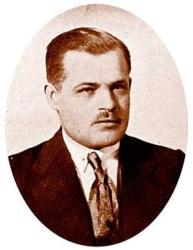
Benjamin Kállay was a Hungarian statesman, diplomat, and historian who became the central architect of Austro-Hungarian rule in Bosnia and Herzegovina. As the empire’s joint minister of finance from 1882 until his death, he oversaw the province’s civil administration and pursued a sweeping program of modernization. Railways, bureaucracy, and public institutions expanded under his watch, but his effort to foster a unified “Bosnian” identity was also designed to strengthen imperial control and encountered strong resistance.
A Diplomat with a Balkan Focus
Kállay was born in Pest, now part of Budapest, on December 22, 1839. After studying law and economics, he entered Hungarian political life, serving in the Hungarian parliament. His interest in southeastern Europe took him into diplomacy: from 1868 to 1875, he was Austria-Hungary’s consul general in Belgrade, where he developed a close knowledge of Serbian politics, language, and history.
He later represented the empire at an international conference on Eastern Rumelia and held senior posts in the foreign ministry in Vienna. In 1881, he served as acting foreign minister and participated in negotiations that brought Austria-Hungary and Serbia closer through a secret convention. The following year, he was appointed joint minister of finance, a position that made him responsible for the administration of Bosnia and Herzegovina.
Modernization and Imperial Rule
Austria-Hungary had occupied Bosnia and Herzegovina in 1878, while the territory remained formally under Ottoman sovereignty. Kállay reorganized its administration, separating civil government from military authority and building a provincial bureaucracy. His government expanded the railway network, encouraged Austrian and Hungarian investment, and promoted economic, social, and cultural development. Yet existing land relations changed little, and modernization proceeded within a system of imperial rule rather than local self-government.
Kállay also tried to contain competing Serbian and Croatian national movements by promoting a common Bosnian identity, language, and history across the province’s religious communities. The idea sought to unite residents through a territorial identity while reinforcing loyalty to the empire. It gained some support among local officials and religious leaders but faced opposition from national movements and communities that saw the policy as a constraint on their own identities. The project did not overcome those divisions.
Scholarship and Legacy
Alongside his political career, Kállay wrote about the history and politics of southeastern Europe. His works included a history of the Serbs from 1780 to 1815 and studies of Russian policy in the East and Hungary’s position between East and West. He became a corresponding member of the Hungarian Academy of Sciences in 1878 and a full member in 1888, and was also elected to the Vienna Academy of Sciences.
Kállay died in Vienna on July 13, 1903, while still in office. His tenure left a visible mark on Bosnia and Herzegovina through new infrastructure and a more developed administrative system. It also showed the limits of attempting to engineer a shared national identity from above. Remembered both as a capable administrator and as an imperial strategist, he remains a consequential and contested figure in the region’s modern history.