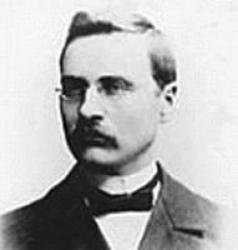
Boris Bogaevsky
- Early Life and Education
- International Studies and Research
- Academic Career
- Return to Leningrad
- Later Years and Legacy
Early Life and Education
Boris Leonidovich Bogayevski was born in St. Petersburg into a noble family. After graduating from the 10th St. Petersburg Gymnasium, he enrolled in the classical department of the historical-philological faculty of St. Petersburg University. In 1907, he graduated with distinction and was awarded a first-degree diploma, earning him the opportunity to pursue a professorship at the university.
International Studies and Research
Immediately after graduating, Bogayevski traveled abroad to study under leading antiquarians in Germany, Italy, and Greece. For two and a half years, he attended lectures and visited museums, broadening his knowledge of ancient civilizations. In 1916, he published the first volume of his monograph, "The Agricultural Religion of Athens," in Petrograd.
Academic Career
In June 1916, Bogayevski began teaching as a privat-docent at Perm University. In October 1917, he became dean of the historical-philological faculty at the Perm branch of Petrograd University. After three years in Perm, he moved to Tomsk in 1919, continuing his teaching there. From June 1920, he served as a professor in the Department of the Ancient World at Tomsk University. In 1921, he became the rector of Tomsk University, a role he held until 1922.
Return to Leningrad
In 1922, the Faculty of Oriental Studies at Tomsk University was dissolved. Bogayevski and many of his colleagues returned to Petrograd. From the 1922/1923 academic year, he became a professor and head of the Department of History of Material Culture at Petrograd (later Leningrad) University. There, he taught courses on the history, art, and religion of the ancient world.
Later Years and Legacy
Boris Bogayevski passed away in the besieged city of Leningrad in 1942. He left behind a significant body of work, including numerous publications on ancient Greece and Rome. His contributions to the study of history, archaeology, and philology continue to be recognized and valued by scholars today.