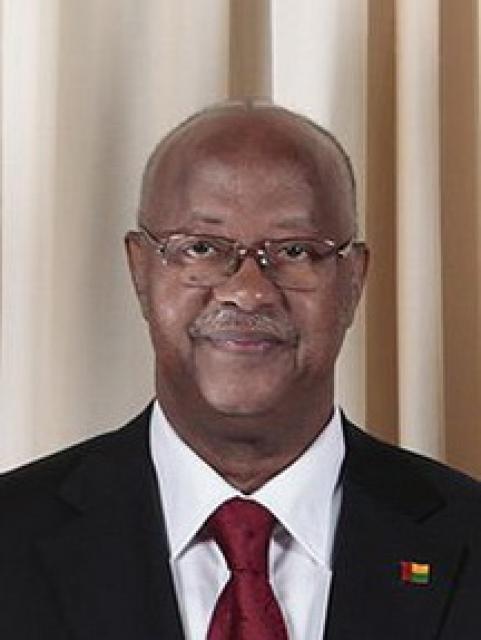
Carlos Junior Gomes
- Early life and business career
- First term as prime minister
- A second premiership amid instability
- The coup and exile
Carlos Gomes Júnior is a Bissau-Guinean politician and former banker who twice served as prime minister of Guinea-Bissau. A long-time leader of the African Party for the Independence of Guinea and Cape Verde (PAIGC), he rose through business and parliamentary politics to lead the country during two periods of constitutional transition and military instability.
Early life and business career
Born in Bolama on 19 December 1949, Gomes Júnior worked in banking and business before becoming a national political figure. He worked at the central bank and ran a fuel-import company. His early experience in finance later informed his public image as a businessman and technocrat.
He entered parliament in 1994, when Guinea-Bissau held its first multiparty elections. Within the PAIGC, the party that led the country’s independence movement, he rose to become its president in 2002. His leadership helped guide the party’s return to office after the 2003 military coup and the 2004 parliamentary elections.
First term as prime minister
Gomes Júnior became prime minister in May 2004, leading a government formed after the PAIGC won the largest share of seats in parliament. The country was emerging from years of political upheaval and economic disruption, and his administration faced the challenge of restoring public services and bringing international assistance back to Guinea-Bissau.
His first term ended in November 2005, when President João Bernardo Vieira dismissed the government after returning to office. Gomes Júnior remained a prominent PAIGC figure and returned to the premiership after the party’s strong result in the 2008 legislative election. He took office again in January 2009.
A second premiership amid instability
The second term was marked by deep tensions between civilian leaders and the armed forces. Gomes Júnior spoke in favor of military reform and efforts to curb drug trafficking, while also seeking international support for the country’s finances and development. In April 2010, an army mutiny briefly detained him before he was released. Guinea-Bissau’s political climate remained fragile, with unresolved killings and repeated military interventions shaping public life.
In 2012, after President Malam Bacai Sanhá died, Gomes Júnior resigned as prime minister to run for president as the PAIGC candidate. He won 48.97 percent of the vote in the first round, placing ahead of his rivals but short of the majority needed to avoid a runoff.
The coup and exile
On 12 April 2012, the military seized power on the eve of the runoff campaign. Gomes Júnior and interim president Raimundo Pereira were arrested, and the presidential election was interrupted. After being released from military custody, Gomes Júnior went into exile in Portugal and called on the international community not to recognize the transitional authorities.
He returned to Guinea-Bissau in 2018 after about five years away. The interrupted election remains a defining episode in his political life: a first-round victory that had brought him close to the presidency was overtaken by a coup, underscoring the country’s long struggle to keep civilian government and electoral politics intact.


