Charles K. Bliss
 Australia
Karl Bliss: A Biography
Karl Bliss, a chemist and specialist in semiotics, was the inventor of the international semantic language system known as "Blissymbolics". Born as Karl Kasiel Blitz in the Austro-Hungarian Empire, which is now part of Ukraine, Bliss had a humble upbringing. His father worked as an optician, mechanic, and wood turner to support the family.
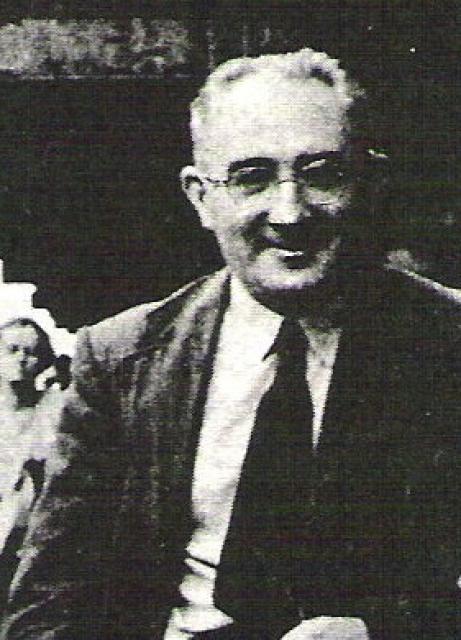
As a child, Bliss showed an early talent for understanding symbols and diagrams, including his father's. He was also fascinated by chemical formulas, which he saw as a universal language that could be understood by scientists of different nationalities.

Bliss's childhood was marked by hardship, as his family suffered from poverty, hunger, and anti-Semitic persecution. Witnessing the anti-Jewish pogroms that followed Russia's defeat in the Russo-Japanese War further fueled his desire to improve existing technologies and make life easier for ordinary people.
Bliss graduated from Vienna University of Technology in 1922 with a specialization in industrial chemistry. He later found employment in an electronics company, where he eventually became the head of the patent department.
In March 1938, Austria was annexed by the Third Reich, and Bliss, being Jewish, was initially sent to the Dachau concentration camp, and later to Buchenwald. His wife, Clara, who was a German Catholic, fought tirelessly for his release. Although Bliss was eventually freed, he was forced to leave the country. He settled in England and attempted to bring his wife to join him, but their reunion was interrupted by the outbreak of World War II.
Clara managed to escape to Greece through Romania, but the Italian invasion of the country disrupted their plans. They were only reunited in Shanghai in late 1940. However, war followed them there, and they were sent to a ghetto. Despite having the opportunity to claim her German citizenship, divorce her Jewish husband, and secure her freedom, Clara chose to stay with Bliss in the ghetto.
It was in Shanghai that Bliss became fascinated with Chinese characters and began studying the Chinese language. This eventually inspired him to develop his own universal symbol language.
In July 1946, Bliss and his wife emigrated to Australia. While working as a laborer with no relevant qualifications, Bliss continued to work on his symbol language system during his spare time. Although his system did not gain much popularity at the time, Bliss and his wife eventually obtained Australian citizenship.
Bliss received recognition for his contributions to society and his help for disabled children when he was awarded the Order of Australia in 1976. He was also made an honorary member of the Australian National University. Karl Bliss passed away in 1985.