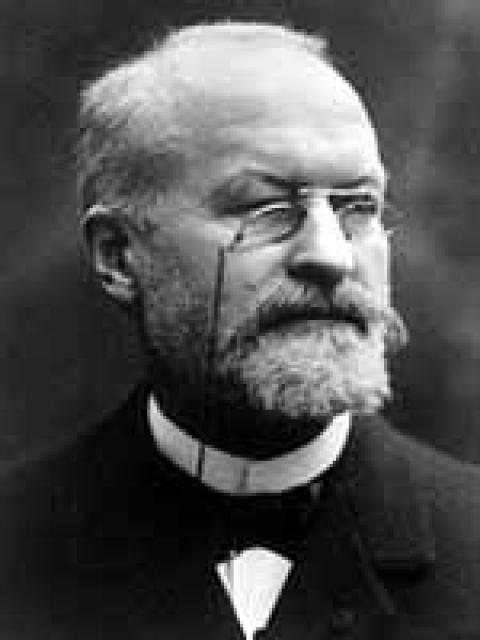
Charles Laveran
 France
- Charles Louis Alphonse Laveran: Nobel-Winning Parasitologist
- Military Medical Career
- - Wrote a treatise on military medicine, focusing on malaria
- - Proposed that malaria was caused by a microorganism
- - Identified these parasites as the causative agents of malaria
- - Awarded the Moscow International Congress of Medicine Prize in 1906
- Research on Trypanosomes
- Nobel Prize and Later Work
- - Continued research on protozoa, including leishmaniasis
Charles Louis Alphonse Laveran: Nobel-Winning Parasitologist
Early Life and Education- Born in Paris on June 18, 1845
- Father was a military physician; ancestors were doctors and military officers
- Graduated from the Imperial Military Medical School in Strasbourg in 1867
Military Medical Career
- Served as a military physician during the Franco-Prussian War- Appointed head of the department of military medicine and epidemiology at the École du Val-de-Grâce in 1874
- Wrote a treatise on military medicine, focusing on malaria
Study of Malaria in Algeria- Sent to Algeria in 1878 to study malaria
- Inspired by Louis Pasteur's theory of microbial origin of diseases
- Confirmed the presence of a dark pigment in blood and organs of malaria patients
- Proposed that malaria was caused by a microorganism
Discovery of the Malaria Parasite- Observed white blood cells containing the dark pigment
- Identified crescent-shaped and spherical bodies in fresh blood
- On November 5, 1880, discovered moving, whip-like structures in the spherical bodies
- Identified these parasites as the causative agents of malaria
- Today known as plasmodia, a type of protozoanRecognition and Honors
- Received the prestigious Bréant Prize from the French Academy of Sciences in 1889
- Received the Jenner Medal from the Epidemiological Society of London in 1902
- Awarded the Moscow International Congress of Medicine Prize in 1906
- Elected member of the French Academy of Sciences, the Academy of Medical Sciences, and several international scientific societies
Research on Trypanosomes
- After joining the Pasteur Institute in 1896, studied trypanosomes, protozoans transmitted by insects
- Contributed to the understanding of their morphology, biology, and pathogenicity
- Did not discover the trypanosome responsible for African sleeping sickness but advanced research in this area
Nobel Prize and Later Work
- Awarded the Nobel Prize in Physiology or Medicine in 1907 "for his work on the role of protozoa in causing diseases"
- Used the prize money to establish a laboratory for tropical medicine at the Pasteur Institute
- Continued research on protozoa, including leishmaniasis
Character and Legacy- Known for his unwavering determination, patience, and optimism
- Died in Paris on May 18, 1922
- His work paved the way for advancements in the field of parasitology and the development of treatments for malaria and other parasitic diseases


