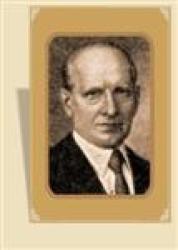
Charles Renouvier
 France
- Charles Renouvier: A Pioneer of Neo-Criticism
- Transition to Philosophy and Historical Studies
- Political Activism and Philosophical Crisis
- Neo-Criticism and the "Essays of General Critique"
- Later Works and Philosophical School
- Religious Conception and the Legacy of Renouvier's Thought
Charles Renouvier: A Pioneer of Neo-Criticism
Early Life and InfluencesCharles Bernard Renouvier was born in Montpellier, France in 1815. He pursued his early education at the École Polytechnique (1834-1836), where he encountered the renowned mathematician Auguste Comte. It was during this time that he met Jules Lachelier, whose philosophical ideas greatly influenced his own intellectual trajectory.
Transition to Philosophy and Historical Studies
Gradually transitioning from mathematics to philosophy, Renouvier gained recognition for his work on the critical history of Cartesianism, which won an essay contest organized by the Academy of Moral and Political Sciences. This work was published in 1842 as the "Manual of Modern Philosophy."
In the following years, Renouvier penned two volumes on ancient philosophy, examining the historical evolution of philosophical thought in relation to scientific knowledge. These works introduced his concept of the universe as an ordered network of infinite centers of activity, or monads.
Political Activism and Philosophical Crisis
Renouvier's involvement in the 1848 Revolution led him to author the "Republican Manual of the Citizen," expressing his political ideals aligned with socialism. However, after the coup d'état of 1851, he retreated from active politics and devoted himself to philosophical research.
This period marked a crisis in Renouvier's thinking as he grappled with the inherent contradiction between the concept of infinity and the idea of human freedom. This led to his development of finitism, which posited the finite nature of real multiplicities.
Neo-Criticism and the "Essays of General Critique"
Influenced by Victor Cousin's eclectic metaphysics and Immanuel Kant's philosophy, Renouvier formulated his own distinctive version of critical philosophy. He expounded his ideas in the monumental "Essays of General Critique" (1851-1864), which explored epistemology, metaphysics, natural science, and the philosophy of history.
Later Works and Philosophical School
Renouvier continued to publish prolifically throughout his life. Notable works from his later period include "Uchronia" (1857), a historical sketch of alternative possibilities in European civilization, and "The Science of Ethics" (1869).
He founded the philosophical school known as "neo-criticism," which shared his principles of critical inquiry. His ideas gained significant influence in the late 19th and early 20th centuries, inspiring thinkers such as William James.
Religious Conception and the Legacy of Renouvier's Thought
In his religious conception, Renouvier emphasized the idea of God as a moral order, demanding justice and the fulfillment of duty. He rejected Christian notions of the Trinity, grace, and the church's mediating role.
Renouvier's philosophy left a lasting impact on the philosophical landscape, challenging traditional metaphysics and offering a nuanced understanding of the relationship between knowledge, freedom, and the human condition. His ideas on neo-criticism, finitism, and ethical personalism continue to shape philosophical discourse today.