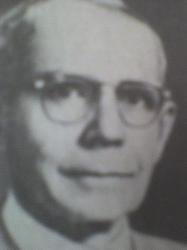
Cheninin Yang
 China
- Childhood and Education
- Research and Breakthroughs
- Stony Brook and Public Recognition
- Personal Life
- Later Years and Legacy
Chen-Ning Yang was one of the twentieth century’s most influential theoretical physicists. His work helped overturn a long-standing assumption about symmetry in the subatomic world, and his collaboration with Robert Mills produced a theory that became a foundation of modern particle physics. Yang spent much of his career in the United States, then returned to China and devoted his later years to teaching and building scientific connections.
Childhood and Education
Yang was born in Hefei, Anhui Province, China, on 22 September 1922. His father, Yang Ko-Chuen, was a mathematics professor at Tsinghua University, and Yang grew up around the university’s academic community. He entered Tsinghua in Beijing as a young student, but the Japanese invasion forced the university and other institutions to relocate inland during the Second Sino-Japanese War.
He completed his undergraduate studies at the National Southwestern Associated University in Kunming in 1942, then earned a master’s degree from Tsinghua in 1944. The years of displacement and upheaval did not interrupt his education. In 1945, he received a fellowship to continue his studies at the University of Chicago, where he completed a doctorate in physics in 1948 under the supervision of Edward Teller.
Research and Breakthroughs
After a brief period teaching at the University of Chicago, Yang joined the Institute for Advanced Study in Princeton in 1949. He developed a close scientific partnership with Tsung-Dao Lee, another Chinese physicist working in the United States. Their research addressed symmetry, the idea that the laws of physics should remain unchanged under certain transformations.
In 1956, Yang and Lee proposed that parity, the symmetry between left and right, might not be conserved in weak interactions. Their proposal challenged what had been treated as an unquestioned rule of nature and called for new experiments. Chien-Shiung Wu and her collaborators soon demonstrated parity violation in beta decay, while other teams confirmed the result in additional particle processes.
The discovery transformed particle physics. In 1957, Yang and Lee shared the Nobel Prize in Physics for their investigation of parity laws and its consequences for elementary particles. They were the first Chinese-born scientists to receive the physics Nobel. Their work also illustrates how theoretical insight and experimental testing combined to revise a basic picture of nature.
Yang’s influence extended beyond the Nobel-winning research. In 1954, he and Robert Mills developed a non-Abelian gauge theory now known as Yang–Mills theory. Its mathematical framework became central to the Standard Model’s description of fundamental particles and forces. Yang also made important contributions to statistical mechanics, including the Yang–Lee theory of phase transitions, and to mathematical physics through the Yang–Baxter equation.
Stony Brook and Public Recognition
Yang became a permanent member of the Institute for Advanced Study in 1954. In 1966, he left Princeton for the State University of New York at Stony Brook, where he became the Albert Einstein Professor of Physics and helped build the university’s Institute for Theoretical Physics. He remained there until retiring in 1999. Over these decades, he received numerous honors, including the U.S. National Medal of Science in 1986 and the Benjamin Franklin Medal in 1993.
Yang became a naturalized U.S. citizen in 1964. He maintained deep ties to China and returned to live and work there in 2004, joining Tsinghua University as a professor and later serving as honorary director of its Institute for Advanced Study. In 2015, he renounced his U.S. citizenship and became a Chinese citizen. At Tsinghua, he taught, supported young researchers, and promoted international scientific exchange.
Personal Life
In 1950, Yang married Tu Chih-li, a teacher. They had three children: Franklin, Gilbert, and Eulee. Tu died in 2003. In December 2004, Yang married Weng Fan, whom he had met years earlier at an academic event. Weng was 28 and Yang was 82; the large age difference drew extensive media attention. The couple remained together during his later years in China.
Later Years and Legacy
Yang continued writing and speaking about physics and its history after returning to China. He died in Beijing on 18 October 2025, aged 103. His scientific legacy rests on ideas that reshaped the understanding of symmetry and elementary particles, but also on a career that crossed continents and connected research communities in China and the United States. For generations of physicists, Yang–Mills theory and the discovery of parity violation remain landmarks in the effort to understand the fundamental structure of the universe.