Chjou Anlay
 China
ChinaBiography of Zhou Enlai
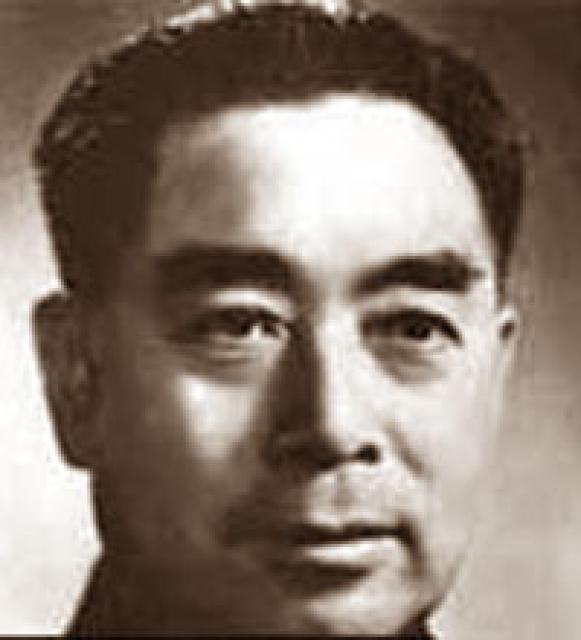
Zhou Enlai was a Chinese statesman and politician, and a diplomat who served as the Premier of the State Council of the People's Republic of China (PRC) from 1949 to 1954. He was born on March 5, 1898, in Huai'an, Jiangsu Province, China, into a modest family of government officials. His father, a low-ranking official, passed away when Zhou was young, and he was taken in by his childless uncle. Later, he was raised by another uncle who was a police officer in Mukden (now Shenyang). Zhou attended school here and studied Chinese classical literature as well as the works of European authors like Charles Darwin and Jean-Jacques Rousseau, and also learned English.
In 1913, Zhou enrolled at Nankai Middle School in Tianjin, where he studied for four years. He lived in a boarding house and supported himself by doing various technical jobs assigned by the school administration. In the autumn of 1919, Zhou entered Nankai University. He became an editor and active author for the daily student newspaper. A year later, Zhou and a group of students traveled to France to continue studying and promoting Marxist ideas.
In September 1924, upon the instructions of the Communist Party of China (CPC) leadership, Zhou returned to China, where he served as the secretary of the Guangdong-Guangxi Committee of the CPC and the head of its military department. At the age of 27, Zhou married Deng Yingchao, an activist of the Tianjin Student Association, whom he had known since 1919 and corresponded with during his time in Europe. Zhou and Deng lived together for over 50 years.
After the betrayal of the right-wing faction of the Kuomintang (KMT) led by Chiang Kai-shek in the revolution, Zhou left the KMT. At the Fifth Congress of the CPC in the spring of 1927, he was elected a member of the CPC Central Committee and remained in its ranks for the following years. On December 12, 1936, Chiang Kai-shek was arrested in Xi'an by his own military commanders. As Chiang Kai-shek was not a supporter of surrendering to Japan and was a prominent political figure capable of leading a united Chinese front, the CPC sent Zhou Enlai to Xi'an to peacefully resolve the incident. He successfully managed this exceptionally difficult diplomatic task. In a conversation with Zhou Enlai, Chiang Kai-shek expressed his readiness to unite all the forces of the country to defend against external enemies and to end the civil war. The peaceful resolution of the Xi'an incident marked the beginning of the formation of a united anti-Japanese national front in China, with the participation of both the KMT and the CPC. However, it took several years for the national liberation struggle to end in victory.
In November 1944, Zhou Enlai was sent to Chongqing for negotiations with the KMT troops and representatives of the United States, who acted as mediators between the KMT and the CPC, with the aim of establishing a coalition government in China. On August 28, 1945, the eve of Japan's surrender, Zhou Enlai, together with Mao Zedong, arrived in Chongqing. The peace negotiations with the KMT resulted in the signing of an agreement. On January 1, 1946, Zhou Enlai was appointed as the representative of the CPC for negotiations with the KMT and the United States on the cessation of military conflicts and the restoration of communication routes. He then served as the head of the CPC delegation at the first session of the Political Consultative Conference of representatives from various parties and public organizations held in Chongqing. At the opening conference of the People's Political Consultative Conference on September 22, 1949, in Beijing, Zhou Enlai presented the draft General Program and practically led the conference's work. At the first session of the National Government of the People's Republic of China, proclaimed on October 1, 1949, he was elected as the Premier of the State Administrative Council and the Minister of Foreign Affairs of the PRC. In these positions, his organizational and diplomatic abilities were prominently demonstrated.
On January 20, 1950, Zhou Enlai arrived in Moscow, where Mao Zedong was at that time, and participated in Sino-Soviet negotiations. On February 14, on behalf of the PRC, Zhou Enlai signed the Treaty of Friendship, Alliance, and Mutual Assistance with the Soviet Union in Moscow. Under this treaty, China received the necessary financial, economic, scientific, technical, and military assistance from the USSR, as well as reliable protection from the Soviet Armed Forces in the event of foreign aggression. Zhou Enlai's activities after 1949 were associated with all the major stages of the PRC's economic construction, as well as the development of culture, science, and education. Thanks to Zhou Enlai, Chinese diplomacy achieved significant success in reducing tension in international relations. His diplomatic talent was particularly evident at the conference of foreign ministers of the five great powers, which opened on April 26, 1954, in Geneva, where the Korean issue and the situation in Indochina were discussed. China and the Soviet Union vigorously supported the proposals of the Democratic Republic of Vietnam (DRV) at the conference, which called for recognizing its independence, as well as Cambodia and Laos. The agreements reached in Geneva consolidated the position of the DRV as a young socialist state, and put an end to the French intervention in Indochina.
At that time, the United States did not recognize the People's Republic of China. The U.S. Secretary of State, John Foster Dulles, even jokingly declared that he would not communicate with the head of the Chinese delegation, even if their cars collided on one of the streets of Geneva. In such circumstances, Zhou Enlai had to start his difficult diplomatic work as the Minister of Foreign Affairs of China.
Many years later, the term "Zhou Enlai's policy" emerged in diplomatic circles, used to describe prudence, consistency, realism, and pragmatism in the pursuit of China's national interests. Zhou Enlai himself was often referred to as the "chief Chinese diplomat," and rightfully so, as he remained an organizer and active participant in all major foreign policy actions of the PRC until the end of his life.
In 1954, Zhou Enlai, along with Indian Prime Minister Jawaharlal Nehru, developed the Five Principles of Peaceful Coexistence (known as "Panchsheel"), which were later recognized and supported by the leaders of 29 Asian and African countries at the Bandung Conference held in April 1955. The decisions reached at the conference, thanks to Zhou Enlai's diplomatic skills and Nehru's cooperation, were imbued with the spirit of the struggle against colonialism and aimed at comprehensive economic and cultural cooperation among Asian and African countries based on the ten principles of peaceful coexistence formulated by the conference.
Zhou Enlai attached great importance to personal contacts with leaders and public figures from foreign countries. He frequently traveled abroad and often received foreign guests in Beijing. He meticulously prepared for his foreign trips, thoroughly studying the dossiers collected by the Ministry of Foreign Affairs of the PRC on all matters related to the country he was visiting.
In November 1956 to February 1957, Zhou Enlai made a series of trips to Asian countries including Vietnam, Cambodia, Burma, India, Pakistan, Afghanistan, Nepal, and Ceylon, establishing contacts with these nations.
In October 1961, Zhou Enlai visited Moscow as the head of the Chinese party delegation at the Congress of the Communist Party of the Soviet Union (CPSU). In his speech at the congress on October 19, he strongly condemned the U.S. military provocations in Berlin, Cuba, Laos, South Vietnam, South Korea, and on the territory of China, specifically Taiwan. He called for unity among the socialist camp: "Unity is strength. With unity, we can overcome everything. There has always been a deep friendship between the Chinese and Soviet peoples... This great unity and friendship between the peoples of our two countries will endure for centuries, just as the Yangtze and Volga rivers will forever flow with their waters."
In the spring of 1966, he visited Burma, India, Nepal, Cambodia, Vietnam, and the Mongolian People's Republic. In late 1963 to early 1964, Zhou Enlai traveled to ten African countries. His public speeches during these trips significantly differed in content and tone from the intense anti-Soviet campaign unfolded in the Chinese press at that time.
Zhou Enlai's personal contribution to the normalization of relations with the United States is particularly valued in China. In order to lead the country out of the chaos of the "Cultural Revolution" and implement the "Four Modernizations" program, massive material resources were required, as well as a large number of highly qualified personnel. The ten-year period of the "Cultural Revolution" led China to economic decline. In such circumstances, Mao Zedong came to the conclusion that it was possible to seek closer ties with the United States and entrusted Zhou Enlai with the practical implementation of this turning point, which he successfully carried out.
It all began with a staged drama called "ping-pong diplomacy" by the Chinese premier. After the World Table Tennis Championships held in Japan, the head of the Chinese government invited the American team to visit China. This competition helped significantly reduce anti-Chinese sentiments in the United States, according to experts, and created a favorable atmosphere for the secret visit of the U.S. National Security Advisor Henry Kissinger to Beijing.
During Kissinger's first visit to Beijing in July 1971, he stayed at the Diaoyutai State Guesthouse. Prior to his arrival, Zhou Enlai personally instructed everyone involved in the visit to strictly observe secrecy and to prevent any "surprises." As Kissinger recalls, during their first meeting, Zhou Enlai asked him if he was among the delegates of the Geneva Conference who refused to communicate with Chinese diplomats. Kissinger said no and earned the premier's approval.
A few months later, Zhou Enlai personally participated in the drafting of the Joint Communiqué between China and the United States, which outlined the positions of both sides and was intended to be published during President Nixon's visit to China. Today, in China, it is believed that the mere fact of the publication of the "Shanghai Communiqué" is the result of Zhou Enlai's diplomatic artistry. His principled position regarding the normalization of relations with the United States is particularly noted. When Assistant to the President, General Alexander Haig, visited Beijing shortly before Nixon's arrival to clarify all the details of the upcoming visit, Zhou Enlai had a long conversation with him, during which he explained that the Americans needed to negotiate with China on an equal footing and bear in mind that China would not make concessions. In the same spirit, the Prime Minister instructed his assistants: "Behave with dignity, show hospitality, but do not fawn over foreigners."
...Chinese oncologists diagnosed Zhou Enlai's illness in May 1972. One might wonder what prevented the 72-year-old Premier from retiring and enjoying a well-deserved rest? However, there was still Jiang Qing and her circle, who continued to enjoy the protection of her elderly, yet still powerful husband, Mao Zedong.
By carefully considering the new lineup of officials in the highest echelons of state power, Zhou Enlai outmaneuvered Jiang Qing and secured the support of the "leader" before she could seize power. Zhou did everything to prevent Jiang Qing and her circle from coming to power after Mao Zedong's death.
He underwent a total of 14 operations. In the spring of 1974, his health deteriorated, and he was constantly in the hospital, but he continued to deal with the affairs of the State Council and receive visitors. On January 13, 1975, Zhou Enlai delivered a speech at the session of the National People's Congress, in which he outlined the "Four Modernizations" program. This is considered by the Chinese as his most important testament.
In February 1975, he underwent another operation, but the progression of the illness could no longer be halted. Zhou Enlai passed away on January 8, 1976. While on his deathbed, he requested his funeral ceremony to be held in the Taiwan Hall of the building of the National People's Congress. After cremation, his ashes were scattered over the fields, mountains, and rivers of China and the waters of the Taiwan Strait.