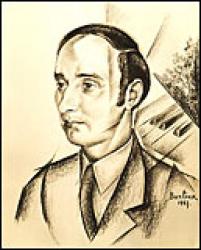
Clarence Barlow
 India
India- Early Life and Education
- Academic and Professional Pursuits
- Directorship and Teaching
- Professional Philosophy and Creative Approach
- Theoretical Contributions
Early Life and Education
Clarence Barlow, a composer of British and Portuguese descent, was born in Calcutta, India, on December 27, 1945. Growing up as part of an English-speaking minority, he received his formal education at Calcutta University and Trinity College of Music in London.
Academic and Professional Pursuits
After obtaining his degrees, Barlow expanded his knowledge by studying at the Hochschule für Musik Köln and the Institute of Sonology at Utrecht University. His unwavering dedication to computer music led him to become a founding member of 'GIMIK: Initiative Musik und Informatik Köln.' In 1988, he served as the musical director of the International Computer Music Conference held in Cologne.
Directorship and Teaching
Barlow's impact extended to his roles as director of the Institute of Sonology and as a titular professor of music theory at the Royal Conservatory of The Hague. During his tenure, he guided the artistic development of renowned composers such as Georg Hajdu, Juan Sebastian Lach, Kristoffer Zegers, Patrick Saint-Denis, and Gabriel Pareyon.
Professional Philosophy and Creative Approach
Currently residing in California, Barlow holds a teaching position at the University of California at Santa Barbara. He favors the synthesis of traditional instrumental timbres using electronic means, believing that "they sound much more lively and exciting." Consequently, while many of his compositions are written for traditional instruments, he frequently employs computers to structure them.
Theoretical Contributions
Barlow's comprehensive theory of tonality and metrics made its debut in his piano work, 'oïluotobüsilesmesi' (1975-1979). The integration of spectral analysis and instrumental resynthesis of human speech significantly shaped his compositions, contributing to their distinctive sound and innovative approach.