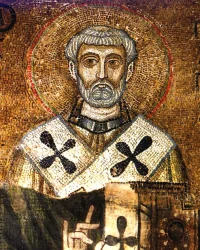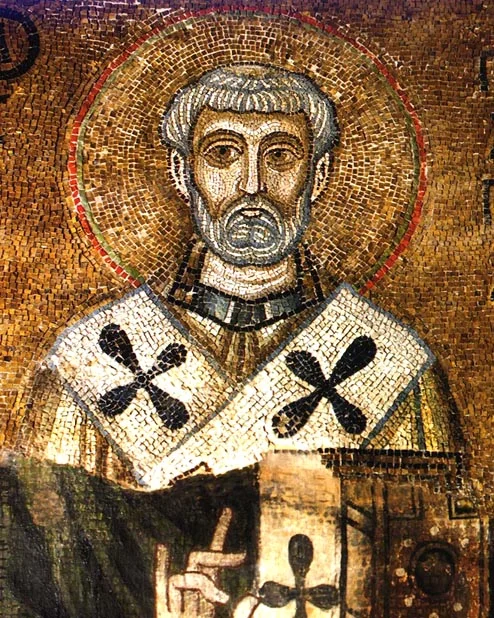
Clement
 Ancient Rome
Clement of Rome is remembered as an early leader of the Christian community in Rome and as the figure traditionally associated with one of the oldest Christian writings outside the New Testament. His First Letter to the Corinthians offers a rare glimpse into the concerns of believers at the end of the first century: how to settle disputes, preserve community, and recognize leadership. Later church lists count him as the fourth pope, though the structure of the early Roman church was not yet the later papacy.
A leader in the early Roman church
Very little is known with certainty about Clement’s life. Early Christian writers place him among the leaders of the Roman church in the late first century, and some traditions connect him with the apostles Peter and Paul. The precise dates and order of the earliest bishops of Rome are uncertain, so accounts that give exact years for his leadership should be treated with care.
Clement is best known through a letter sent from the church in Rome to the church in Corinth, commonly called First Clement. Written around the end of the first century, the letter does not name an individual author; it speaks in the voice of the Roman congregation. Early Christian testimony attributes it to Clement, and that association became firmly established in the tradition.
A letter to Corinth
The letter responds to a dispute in Corinth in which some members had removed their presbyters, or elders, from office. Clement urges the community to restore harmony, act with humility, and respect its appointed leaders. He draws on examples from Jewish scripture and early Christian teaching, including the remembered endurance of Peter and Paul.
First Clement is valuable not only as advice to a divided congregation but as evidence of how early Christian communities understood authority and cooperation. The Roman church intervened in a dispute many miles away, but did so in the name of the congregation rather than through a later model of centralized papal government. The letter circulated widely and continued to be read in some churches; for a time, it was even included among sacred writings in certain Christian manuscripts.
Memory and tradition
Later generations honored Clement as a saint and martyr. Stories of his death, including accounts that he was drowned with an anchor, belong to later tradition and cannot be confirmed with the same confidence as the letter associated with his name. What can be seen clearly is the enduring influence of First Clement, which preserves a snapshot of Christian life before the faith had become an imperial religion.
Clement’s legacy rests on a text that turns a local church conflict into a broader reflection on unity, humility, and responsibility. Its voice is communal, its setting is practical, and its concern for the health of a divided congregation has helped keep it relevant to Christian readers for nearly two millennia.