Constance Markievicz
 Great Britain
- Early Life and Artistic Pursuits
- Political Activism and Suffragette Movement
- Participation in the Easter Rising
- Imprisonment and Release
- First Dáil and Revolutionary Politics
- Minister for Labour and Civil War
- Later Political Career
- Legacy
Constance Markievicz: A Pioneering Irish Suffragette, Revolutionary, and Politician
Early Life and Artistic Pursuits
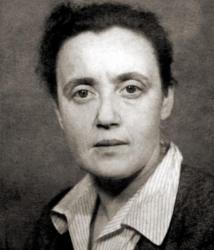
Constance Georgine Gore-Booth was born in London's Westminster into a wealthy landowning family. As a young woman, she pursued an education in art, studying at the Slade School of Fine Art in London and the Académie Julian in Paris. It was in Paris that she met her future husband, Count Casimir Dunin-Markiewicz, a Polish artist.
Political Activism and Suffragette Movement
Markievicz's political awakening occurred while she was living in Dublin with her husband. She joined Sinn Féin and Inghinidhe na hÉireann ("Daughters of Ireland"), a female revolutionary movement led by Maud Gonne. In 1908, she actively campaigned against the election of Winston Churchill, a prominent Liberal politician.
Participation in the Easter Rising
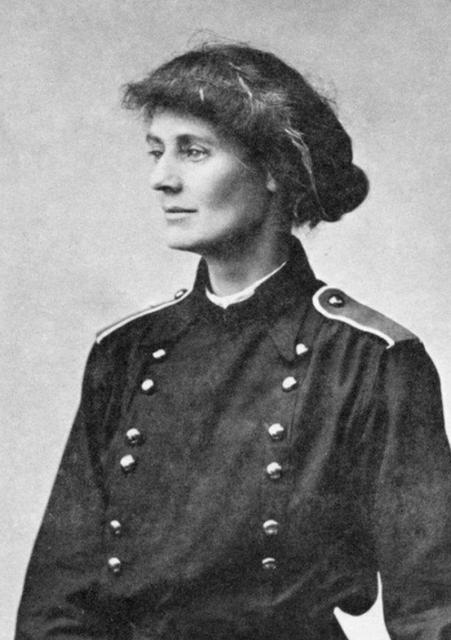
In 1913, Markievicz became involved with James Connolly's Irish Citizen Army, a volunteer force that defended striking workers. She also helped establish Fianna Éireann, a paramilitary group for young people. During the Easter Rising of 1916, she fought alongside the Irish Republican Army as an officer in the Irish Citizen Army. She participated in the seizure of St. Stephen's Green and was involved in heavy fighting.
Imprisonment and Release
Following the Rising, Markievicz was arrested and sentenced to life imprisonment. However, due to her gender, her sentence was commuted. She was first imprisoned in Dublin's Kilmainham Gaol and then in Aylesbury Prison in England. She was released in 1917 under a general amnesty.
First Dáil and Revolutionary Politics
In 1918, Markievicz was elected as a Sinn Féin MP for Dublin's St. Patrick's Division. She became the first woman elected to the British House of Commons. However, following Sinn Féin's policy of abstention, she did not take up her seat. Instead, she became a member of the First Dáil, the revolutionary Irish parliament.
Minister for Labour and Civil War
In 1919, Markievicz was appointed Minister for Labour in the Irish Republic, becoming the first female minister in Ireland. She served in this role until 1922. During the Irish Civil War, she fought on the anti-Treaty side and participated in the Battle of Dublin.
Later Political Career
After the Civil War, Markievicz joined Fianna Fáil and served as the party's first chairperson. She was elected to the Fifth Dáil in 1927 but died shortly thereafter, at the age of 59, from complications related to an illness.
Legacy
Constance Markievicz is remembered as a pioneering figure in the Irish independence movement. Her unwavering commitment to republicanism, her involvement in the Easter Rising, and her service as the first female minister in Ireland all cemented her place in Irish history. She remains an inspiration for generations to come.