Daniel R. Denison
 Switzerland
- Education and Early Academic Career
- The Denison Model
- Academic Work and International Consulting
- Later Career and Legacy
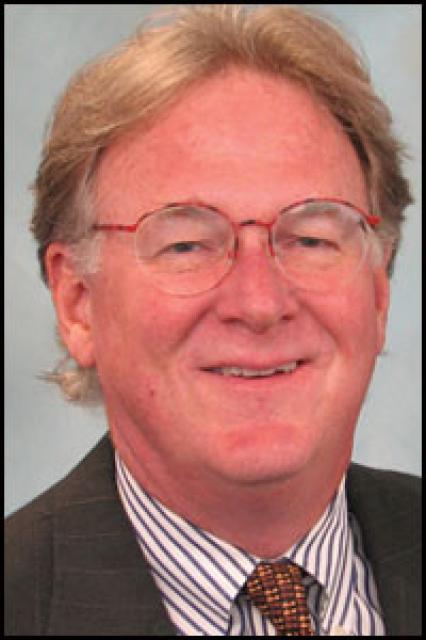
Daniel R. Denison built a career around a deceptively practical question: how does the culture inside an organization shape its results? A scholar, teacher, and consultant, he helped turn that question into a widely used framework for assessing workplace culture and its connection to business performance.
Education and Early Academic Career
Denison studied psychology, sociology, and anthropology at Albion College, earning his bachelor’s degree before pursuing graduate work in sociology at Kent State University. He completed a PhD in organizational psychology at the University of Michigan, where he also worked as a researcher. His academic path combined social science with an interest in how people make decisions and work together inside institutions.
At Michigan, Denison became an associate professor of organizational behavior and human resource management in the business school. He taught in MBA, doctoral, and executive education programs, while developing research on the relationship between organizational culture and effectiveness.
The Denison Model
Denison’s best-known contribution is a model that organizes organizational culture around four traits: involvement, consistency, adaptability, and mission. The idea was to help leaders assess how an organization’s shared habits and priorities affect performance, and to offer a way to compare cultural strengths with business outcomes.
His 1990 book, Corporate Culture and Organizational Effectiveness, brought this work to a wider professional audience. In a 1995 article with Aneil K. Mishra, “Toward a Theory of Organizational Culture and Effectiveness,” Denison developed the research case for connecting cultural traits with organizational results. The framework later informed the Denison Organizational Culture Survey and related leadership assessments, used by companies seeking to understand and guide organizational change.
Academic Work and International Consulting
In 1999, Denison joined IMD Business School in Lausanne, Switzerland, as professor of management and organization. He taught and worked with executives in an international environment, drawing on experience across regions including Asia, Europe, Latin America, and the Middle East. He remained a professor at IMD through 2016 and became professor emeritus in 2017.
Alongside his academic work, Denison co-founded Denison Consulting, advising organizations on leadership, culture change, mergers, turnarounds, and globalization. This combination of research and consulting shaped the practical tone of his work: culture was not simply an abstract subject, but something leaders could examine and influence as their organizations faced change.
With IMD colleague Robert Hooijberg, he co-authored Leading Culture Change in Global Organizations: Aligning Culture and Strategy (2012), a guide to connecting a company’s internal culture with its strategic aims. His articles have appeared in journals including Organization Science and Organizational Dynamics.
Later Career and Legacy
Denison’s influence rests on the bridge he built between organizational psychology and management practice. His research tools gave companies a structured vocabulary for discussing culture, while his teaching and consulting helped executives apply those ideas to leadership and performance. After retiring from Denison Consulting in 2025, he continued to be identified with the field he helped shape.
Away from organizational research, Denison has also been described by his firm as a Formula 2000 racing driver, an unexpected parallel to his professional interest in high performance. In both settings, his work has centered on how people, systems, and shared habits come together to produce results.