Dario Damjanovic
- Early years and breakthrough
- Hajduk Split and international football
- A career across Europe and Asia
- From player to coach
- Legacy and public image
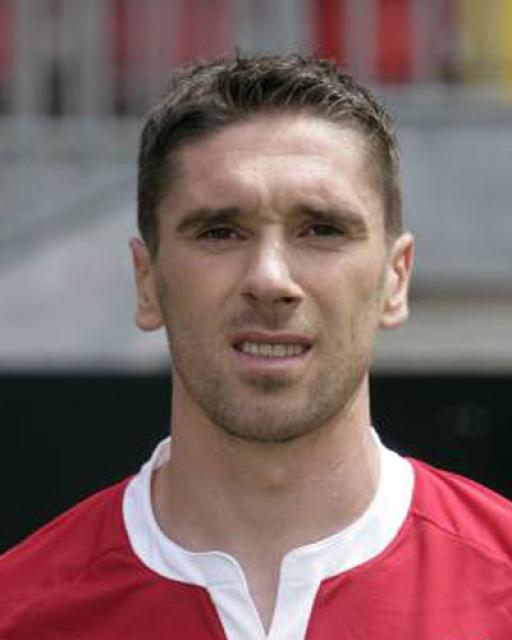
Born in Gradačac on 23 July 1981, Dario Damjanović built a career from modest beginnings into a run of high-profile football moves across the Balkans, Russia, Germany and Hong Kong. A hard-running defensive midfielder, he represented Bosnia and Herzegovina, won a league title with Hajduk Split and later moved into coaching. His own account of the early years is a story of persistence: he has recalled walking miles to training and nearly giving up football before a call from Hajduk changed his prospects.
Early years and breakthrough
Damjanović began playing in Šamac and developed professionally at Modriča. In a 2024 interview with Oslobođenje, he recalled that he had no formal football academy or specialist coach investing in him, and that the conditions were difficult. He said his salary at Modriča was just 200 convertible marks when the club won the Bosnian Cup. Sometimes he hitchhiked or walked seven or eight kilometres to training.
At one point, he thought his football career might be over and considered taking a job at a petrol station so he could start a family. Instead, Hajduk Split coach Igor Štimac called with an opportunity. Damjanović had already completed a trial and returned to Modriča thinking nothing would come of it; when Hajduk needed a defensive midfielder, he was selected. Modriča’s cup success and his performances there had helped put him on the map.
Hajduk Split and international football
Damjanović joined Hajduk in 2004 and spent more than three years in Split. He won the Croatian league title in his first season, becoming part of a club with an immense following and demanding expectations. In a 2020 interview, he remembered that his arrival came in the sensitive post-war period, but said he did not encounter problems in Split. He worked hard to earn his minutes in a team where local players naturally drew strong support.
Hajduk also brought difficult moments. He recalled the shock of being eliminated from the Champions League qualifying rounds by Shelbourne in 2004, after which angry supporters waited for the team. Damjanović said he and some teammates stayed at the Poljud stadium for several days rather than risk going into town. He also described a clash in training with teammate Niko Kranjčar that left him needing hospital treatment; the two later reconciled and became friends.
His combative style won him the nickname “Damjan,” and he joked that people saw him as a player who only knew how to hit and tackle. He represented Bosnia and Herzegovina from 2004 through 2010, appearing in qualifying matches and friendlies against sides including Spain, Turkey, Norway and Greece. He later spoke with pride about sharing the national-team dressing room with stars such as Sergej Barbarez, Edin Džeko and Miralem Pjanić.
A career across Europe and Asia
After Hajduk, Damjanović played for Luch-Energiya Vladivostok in Russia and 1. FC Kaiserslautern in Germany. He described the German club as a career high point: playing there, he said, opened doors and brought a level of financial security he had not known earlier. Looking back, he wished he had stayed in Germany rather than returning to Bosnia and Herzegovina, but family and professional difficulties influenced his decision.
He later joined Čelik Zenica, then played for Serbian clubs Novi Pazar and Jagodina, with whom he won a cup. His career also took him to Hong Kong’s Sun Pegasus. He eventually returned to clubs closer to home, including Zvijezda Gradačac, Modriča and Borac Šamac, and continued playing into his late thirties before retiring in 2020.
From player to coach
After retiring, Damjanović moved into management, beginning at Zvijezda Gradačac. He subsequently coached Orašje, Simm-Bau and Čelik Zenica. His playing experience shaped the way he spoke about coaching: in a 2020 interview, he cited Hajduk coach Zoran Vulić as the mentor who most influenced him and said he tried to pass on what he had learned. Having experienced delayed wages and difficult training conditions himself, he argued that discipline should take account of the realities players face.
By 2025, he had also taken charge of FK Igman Konjic. His coaching path has continued largely in Bosnian football, where his years as a player at home and abroad give him a wide range of experiences to draw on.
Legacy and public image
Damjanović’s career was built less on a polished academy route than on resilience, versatility and willingness to work. Supporters remember a fiercely competitive midfielder, while his own interviews show a reflective side: he has spoken openly about the choices he would change, the financial uncertainty of his early career and the people who helped him progress. From a modest start in Modriča to titles with Hajduk and a spell in the Bundesliga, his journey stands as an example of how persistence can turn a near-ending into a new beginning.