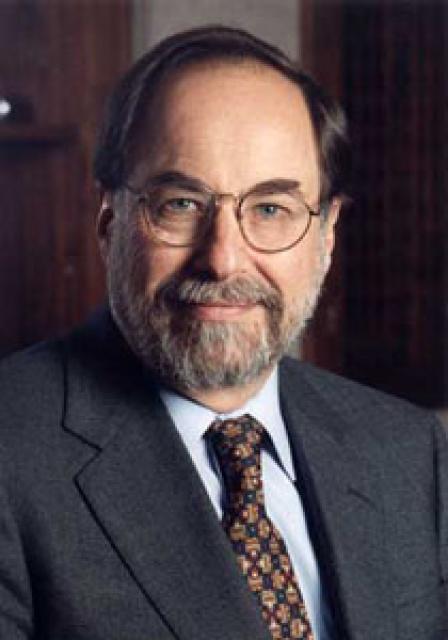
David Baltimore
 USA
USABiography of David Baltimore
David Baltimore is an American molecular biologist and a Nobel laureate in Physiology and Medicine (1975). He was born on March 7, 1938, in New York. Baltimore developed an interest in biology during his summer internship at the Jackson Laboratory in Bar Harbor, Maine, where he had the opportunity to observe the work of scientists. It was there that he first met Howard M. Temin, a recent graduate of Swarthmore College in Pennsylvania.
In 1956, Baltimore enrolled at Swarthmore College, initially studying biology but later transferring to the chemistry department. During one of his summer internships at the Cold Spring Harbor Laboratory, he worked under the guidance of Dr. George Streisinger, which sparked his interest in molecular biology.
In 1960, Baltimore graduated from Swarthmore College with honors and entered the biophysics program at the Massachusetts Institute of Technology (MIT) in Cambridge, Massachusetts. However, after a year in the program, he decided to specialize in animal viruses and shifted his focus to virology. He attended summer courses on virology at Cold Spring Harbor, taught by Dr. Richard Franklin and Edward Simon. After completing the courses, Baltimore joined the laboratory of Dr. Richard Franklin at the Rockefeller Institute in New York, where he conducted research in virology. In 1964, he defended his doctoral dissertation and continued his studies in viral research.
During this time, Baltimore attended a course by Dr. Gerard Harvitz, a renowned enzymologist, at the Albert Einstein College of Medicine. It was through these experiences and collaborations that Baltimore became interested in the replication mechanism of the genetic system in living cells.
In 1965, Baltimore began working at the Salk Institute for Biological Studies in La Jolla, California, where he met Renato Dulbecco, a geneticist studying the Rous sarcoma virus. Dulbecco introduced Baltimore to the concept of cellular transformation, where tumor cells are transformed by tumor viruses, leading to uncontrolled cell division. This theory contradicted the prevailing belief that genetic information could only be transmitted from DNA to RNA, not the other way around.
In 1970, both Baltimore and Temin independently discovered the enzyme known as reverse transcriptase, which is responsible for synthesizing DNA from RNA. This finding became a significant topic of research in microbiology for the following decade.
Baltimore became a professor of biology at MIT in 1972, where he led research on the partial synthesis of the gene involved in the biosynthesis of hemoglobin in mammals. He also continued to study reverse transcriptase in other oncogenic viruses, discovering eight viruses possessing the enzyme, which later became known as retroviruses. Retroviruses are responsible for some forms of cancer, hepatitis, and AIDS.
In 1975, Baltimore, along with Renato Dulbecco and Howard M. Temin, was awarded the Nobel Prize for their discoveries related to the interaction between oncogenic viruses and the genetic material of cells.
Baltimore was concerned about the potential consequences of genetic engineering and joined a group of microbiologists advocating for a moratorium on certain DNA experiments. In 1976, he initiated the creation of the National Institutes of Health's Recombinant DNA Advisory Committee, which gained support from other scientists.
Baltimore has received numerous awards for his research, including the Eli Lilly Award for Microbiology and Immunology Research (American Society for Microbiology, 1971), the International Gardner Award (1974), and the National Academy of Sciences Steere Prize for Molecular Biology Research (1974).
He is a member of the American Association for the Advancement of Science, the American Academy of Arts and Sciences, and the National Academy of Sciences.
Notable works by Baltimore include "Viral RNA-Dependent DNA Polymerase" published in Nature (London) in 1970 and "RNA-Directed DNA Synthesis and DNA Tumor Viruses" in Advances in Virus Research in 1972.


