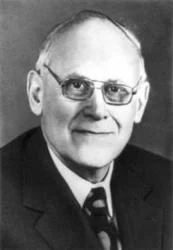
David J. Thouless
David J. Thouless was a British theoretical physicist whose work revealed that the geometry and topology of a material could determine how it behaves. His ideas reshaped the study of superconductors, superfluids and other quantum systems. In 2016, decades after some of his most influential discoveries, he shared the Nobel Prize in Physics for theoretical work on topological phases of matter.
From Cambridge to the United States
Thouless was born in Bearsden, Scotland, on 21 September 1934 and grew up in Cambridge. He studied physics at the University of Cambridge, graduating in 1955, then completed a doctorate at Cornell University under Nobel laureate Hans Bethe. He worked at the University of Birmingham with physicist Rudolf Peierls before returning to Cambridge to teach.
In 1965, Thouless became professor of mathematical physics at Birmingham. His research there with Michael Kosterlitz focused on how materials behave when their dimensions are extremely small. Their work showed that two-dimensional systems could undergo a type of phase transition that earlier theories had seemed to rule out. Now known as the Kosterlitz–Thouless transition, it helped explain changes in systems such as thin films and superfluids.
Topology Enters Quantum Physics
In 1980, Thouless moved to the University of Washington in Seattle, where he continued studying collective behavior in matter. His theoretical work helped explain the precise quantization of the Hall effect: when electrons move through a material under a magnetic field, the electrical response can change in fixed, discrete steps.
Thouless showed that this precision was tied to topology, a branch of mathematics concerned with properties that remain unchanged when shapes are smoothly distorted. In certain materials, topological properties protect the behavior of electrons against ordinary imperfections. This insight helped open a new way to classify phases of matter and later influenced research into topological insulators and other quantum materials.
Recognition and Legacy
Thouless shared half of the 2016 Nobel Prize in Physics, with the other half awarded jointly to Kosterlitz and Duncan Haldane. The award recognized theoretical discoveries made long before topological materials became a major experimental research area. He had already received many honors, including election to the Royal Society.
He died in Cambridge on 6 April 2019, aged eighty-four. Thouless’s work showed how abstract mathematical ideas could illuminate the behavior of real materials. His influence spans condensed-matter physics, quantum theory and the modern search for new states of matter.