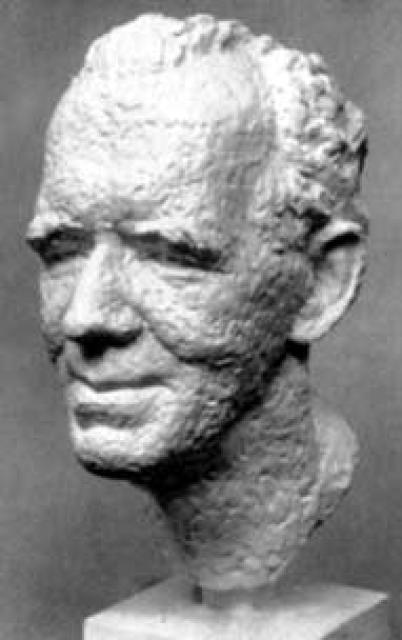
Dmitriy Chizhevskiy
 Germany
- Biography of Dmitry Ivanovich Chizhevsky
- Early Life and Education
- Political Involvement and Academic Career
- Academic Career in Germany
- Chizhevsky's Relationship with the Soviet Union and the Nazi Era
- Later Years and Legacy
Biography of Dmitry Ivanovich Chizhevsky
Dmitry Ivanovich Chizhevsky was a German philologist, Slavist, and philosopher of Russian-Ukrainian origin. He was a prominent scholar of Slavic cultures, and his works in Slavistics have been translated into many languages and are considered essential textbooks in English, Spanish, and German-speaking countries. Chizhevsky lived in Germany for almost five decades, and in the 1920s and 1940s, he worked alongside Max Vasmer. In the 1960s and 1970s, he taught at universities in Halle, Jena, Marburg, and Heidelberg, becoming a renowned figure in German Slavistics. In Russia, his name is almost unknown.
Early Life and Education
Dmitry Ivanovich Chizhevsky was born on March 23/April 4, 1894, into a noble family in the city of Aleksandria, Kherson Governorate (now Kirovograd Oblast). His parents, Ivan Konstantinovich Chizhevsky and Maria Dmitrievna Ershova, were both intellectuals who instilled a love for science, literature, and art in their children. His father, an artillery officer, was involved in a populist circle and was subsequently expelled from the military academy and exiled to Aleksandria. Chizhevsky's mother was a talented artist and educator. The family lived modestly, and their home was filled with a culture of knowledge and creativity. Chizhevsky and his sister Maria were raised with a dedication to enlightenment ideals.
Political Involvement and Academic Career
During his time in the gymnasium, Chizhevsky organized an educational and later a political youth group, which met at his home. Among the participants were eight future professors. After graduating from the Aleksandria gymnasium with a silver medal in 1911, Chizhevsky enrolled at the University of St. Petersburg, where he studied philosophy and Russian philology from 1911 to 1913. He then moved to the University of St. Vladimir in Kiev from 1913 to 1918, where he studied Slavic philology. In Kiev, he was taught by renowned philosophers such as Vasily Zenkovsky and Gilaryov.
At the age of 22, Chizhevsky actively engaged in political activities within the Ukrainian Social Democratic movement. However, his involvement led to his arrest in 1916 for his participation among workers and membership in the Russian Social Democratic Labour Party (Mensheviks). He was released during the February Revolution, and for the next year, he edited the Kiev Menshevik newspaper "Rabochaya Zhizn" (Workers' Life). Chizhevsky also served as the secretary of the Ukrainian Central Committee of the Russian Social Democratic Labour Party. As a member of the Russian faction in the Central Rada Committee, he voted against the declaration of independence of the Ukrainian People's Republic on January 22, 1918.
In 1919, Chizhevsky married his party comrade Lydia Izrailevna Marshak, a medical student. They had a daughter named Tatiana, who would later become a professor and historian of Slavic languages at Wayne State University in the United States. During the occupation of Kiev by the Denikin's Volunteer Army from August 1919 to January 1920, Chizhevsky worked as a teacher in the cultural and educational department of the Council of Trade Unions and in a vocational school. In 1920, he became an associate professor of general linguistics at a private women's institute.
In May 1920, when the Red Army entered Kiev, Chizhevsky was arrested by the new authorities. After a brief imprisonment, he was released and worked as a teacher at a workers' and peasants' university and as a secretary at the Socialist Museum. In the spring of 1920, he was sent to Kharkov as an agitator by the Menshevik faction of the Russian Social Democratic Labour Party. However, on August 18, 1920, he was arrested by the Kharkov Cheka (the Soviet secret police) for his anti-Soviet activities. He was transferred to Kharkov from Kiev, where he awaited a special decision by the Cheka. On April 14, 1921, after seven months in the Kharkov prison, he was released. By this time, the University of Kiev had been renamed the Institute of Popular Education, and Chizhevsky was appointed as an associate professor of philosophy. However, before he could give his first lecture, he was arrested again and sent to a camp for interned individuals. Faced with this situation, Chizhevsky and his wife, who had a young child, decided to flee. They successfully crossed the Soviet-Polish border illegally and arrived in Heidelberg on May 14, 1921.
Academic Career in Germany
In his autobiography, which is preserved in the University of Halle archive, Chizhevsky writes that he studied at Heidelberg University in the winter semester of 1921/22 and then at Freiburg University from the summer semester of 1922 to the winter semester of 1923/24, focusing primarily on philosophy. In 1924, Chizhevsky severed his ties with the Russian Social Democratic Labour Party (Mensheviks), and in 1926, he joined the German Christian Ecumenical Movement. From 1924 to 1932, he taught at the Ukrainian Pedagogical Institute in Prague, concluding his work there as an extraordinary professor. In 1929, he defended his dissertation on "Hegel and the French Revolution" in Prague. While studying the "Pietistic" archives in Prague, Chizhevsky discovered a manuscript of the main work of Czech educational reformer Jan Amos Comenius (Comenius, 1592-1670), which was considered lost.
From 1932 onwards, Chizhevsky held a position as a lecturer in Slavistics at the University of Halle, and from 1935, he simultaneously taught at the University of Jena. He taught various linguistic courses, including Russian, Ukrainian, Bulgarian, Polish, Czech, and Slovak languages. He also lectured on topics such as the history of Russian literature, the influence of war and revolution on the Russian language, comparative grammar of Slavic languages, and Ukrainian and Polish culture and history. Chizhevsky supervised several dissertations in Slavistics and was a co-editor of the Bern-based journal "Archive for the History of Philosophy." He was also the author of all the philosophical articles in the Universal Ukrainian Encyclopedia published in Lviv in the early 1930s. Chizhevsky was a member of several academic societies, including the Kant Society (Halle), Hegel Society (The Hague), German Society for Slavic Studies (Prague), Slavic Institute (Prague), Linguistic Circle (Prague), Ukrainian Shevchenko Society (Lviv), among others.
In October 1931, Chizhevsky was appointed as a lecturer in Slavic languages at the University of Halle, based on the recommendations of leading Slavists in Germany and Austria. His appointment was highly regarded due to his extensive knowledge and ability to convey the essence of the Russian language, literature, and culture to his students. He was praised for his profound understanding of Russian psychology and soul, which enabled him to elucidate the motivations and desires of the Russian people. The dean of the faculty, Dr. Max Schneider, wrote in a decree that the faculty attached great importance to having a lecturer who could not only introduce students to the Russian language but also possessed a deep understanding of Russian literature and thought.
Chizhevsky's Relationship with the Soviet Union and the Nazi Era
In the late 1920s and early 1930s, Chizhevsky sought contacts with publishers of philosophical literature in Moscow and Kiev. He received publications for review from the Marx-Engels Institute, the Communist Academy, and the Ukrainian State Publishing House. At Chizhevsky's request, the chief editor of the "Archive for the History of Philosophy," A. Stein (Switzerland), ordered catalogs of philosophical publications from Moscow and Kiev. Chizhevsky also anticipated the publication of his works in Ukrainian publishing houses but was disappointed after the publication of his critical article "The Crisis of Soviet Philosophy" in 1930, which severed his contacts with Soviet authorities.
Chizhevsky's publications on the deep historical and philosophical connections between German and Slavic cultures established his authoritative position in German academia. He loved both of his homelands: Russia, where he was born and had to leave in 1921, and Germany, where he had solidified his position. However, he did not embrace the totalitarian regimes in either country. Chizhevsky viewed the White Russian emigration favorably, considering it an enemy of Bolshevism. His anti-Nazi views are well-documented. In Nazi Germany, non-Aryan family connections were not welcomed, and Chizhevsky's situation became increasingly precarious. On April 19, 1937, a decree was issued for the dismissal of all teachers with Jewish relatives, classifying them as undesirable elements. Chizhevsky's position became even more dramatic. However, Dean Max Schneider took a dangerous stand and actively defended him, stating that Chizhevsky's contributions and qualifications were extraordinary. On January 10, 1935, Chizhevsky successfully defended his dissertation on "Hegel in Russia" and was awarded the title of Doctor of Philosophy.
Chizhevsky's wife, Lydia Izrailevna Marshak, and their daughter Tatiana were forced to emigrate to the United States due to the anti-Semitic policies of Nazi Germany. Chizhevsky decided to stay in Germany, hoping for a new beginning in his hypothetical third homeland. However, circumstances did not favor his aspirations. Chizhevsky soon realized that he had made a grave mistake. He and his progressive intellectual friends could not foresee the extent of the transformation of German consciousness under the Nazi regime. The situation became increasingly dire, and Chizhevsky's friends and colleagues distanced themselves from him. He was closely monitored by the authorities.
Later Years and Legacy
Chizhevsky's academic career suffered greatly under the Nazi regime, and his future prospects in Germany became bleak. With the outbreak of World War II, Chizhevsky's work and personal life were severely impacted. His wife and daughter's departure had left him isolated and vulnerable. Chizhevsky's love for both of his homelands remained, but he found solace in the academic community in Germany. Despite the hardships he faced, Chizhevsky continued his research and teaching until his retirement.
After the war, Chizhevsky's contributions to Slavistics and his promotion of cultural understanding between Germany and Russia were recognized. However, due to political circumstances, his name remained relatively unknown in his homeland. Chizhevsky's extensive knowledge and publications in Slavistics have had a lasting impact on the field. He made significant contributions to the study of Russian and Slavic literature, philosophy, and culture, broadening the understanding of the connections between German and Slavic intellectual traditions.
Dmitry Ivanovich Chizhevsky passed away on [date]. His legacy as a German philologist, Slavist, and philosopher of Russian-Ukrainian origin continues to inspire scholars in the field of Slavistics and contributes to the cultural dialogue between Germany, Russia, and Ukraine.




