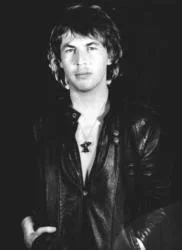
Elena Kazantseva
Elena Kazantseva is a Belarusian poet and singer-songwriter whose Russian-language songs pair the intimacy of the bard tradition with the rhythms of everyday life. Trained as an engineer, she found a distinctive creative voice in poems set to her own music, earning recognition at major festivals and building a lasting audience through recordings, books, and live performance.
Early Life and Education
Kazantseva was born in Minsk on December 5, 1956. She studied piano at music school and began writing songs while still young, but her formal education took a technical direction. In 1981, she graduated from the Belarusian Polytechnic Institute’s power engineering faculty. She worked at a factory and in design and research institutes before song and poetry became the center of her public life.
Finding Her Voice
In 1987, Kazantseva began writing songs to her own poems and joined Alley of the Author’s Song, a Minsk association led by Mikhail Volodin. The bard movement’s close connection between words, melody, and direct performance suited her writing: personal, conversational, and alive to the humor and disappointments of ordinary experience.
Her breakthrough came at the Second All-Union Festival of Author’s Song in Tallinn in 1988. She shared laureate recognition with fellow Minsk performers Mark Merman and Nikolai Kadol. Her song “The Years Go By” (“The Pie Burned in the Oven”) was among the works noted at the festival.
Music and Poetry
Kazantseva continued to perform and became an active organizer in the local bard scene. From 1989 to 1991, she led an amateur-song club at the Palace of Culture of the Trade Unions in Minsk. Her albums include On a Long, Long Memory (1997), Alyoshenka Rides in a Cab (1998), Do You Remember, Border Guard, It Was Summer (1999), Queen of the Neighborhood (2001), and A System of Views and Concepts (2003).
Her poetry also appeared in print, including the collection Evening City (1992) and Concert (in Two Parts) (2002). Critics have singled out the literary quality of her lyrics, which balance tenderness and self-irony. Rather than relying on grand gestures, she often finds the emotional charge in small domestic scenes, fleeting memories, love, and solitude.
Legacy
Kazantseva’s work bridges the page and the stage: her poems retain their force when read, while their conversational language and musical pacing invite performance. From Minsk’s amateur-song community to festival audiences and recorded collections, she has remained a distinctive voice in Russian-language author’s song in Belarus.