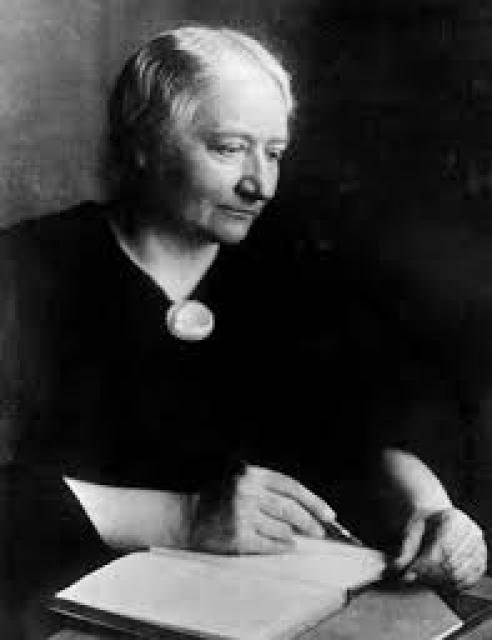
Ellen Key
 Sweden
- Ellen Key: Swedish Writer, Critic, and Educator
- Influential Ideas on Motherhood and Social Welfare
- Literary Legacy: Exploring Gender, Education, and Social Issues
- Spreading Progressive Ideas in Europe
Ellen Key: Swedish Writer, Critic, and Educator
Born into a prominent Swedish family in Sundsholm, Ellen Key was the daughter of Emil Key, founder of the Swedish Agrarian Party, and Sophie Pussie Key, a noblewoman from northern Sweden. Her childhood was filled with extensive home education, where her mother taught her literacy and arithmetic while a governess imparted foreign languages. Key developed a profound love for literature, especially the plays of Henrik Ibsen, such as "Peer Gynt," "Love's Comedy," and "Brandt."
Influential Ideas on Motherhood and Social Welfare
At the age of twenty, Key's father became a member of the Swedish parliament, prompting the family to relocate to Stockholm. It was during this time that Key's ideas on motherhood took shape. Believing it to be a demanding responsibility, she argued that mothers and children should be supported by the state, regardless of their husbands' circumstances. These concepts significantly influenced social legislation in various countries.
Literary Legacy: Exploring Gender, Education, and Social Issues
Key's writings delved into the rights, responsibilities, and working conditions of women. She examined the relationships between generations, the power of maternal love, and the interplay between individuals and society. Known for her independent thought, she did not align herself with any specific group or party. Her most notable works include "Love and Marriage" and "The Century of the Child" (1900), which promoted the importance of children's education and development.
Spreading Progressive Ideas in Europe
In 1903, Key embarked on a European tour to disseminate her ideas. She delivered public lectures in Germany and Austria, addressing issues close to her heart, such as the emancipation of women and the welfare of children. Her travels and writings made a significant impact on European society, fostering progressive social reforms and inspiring a new era of social justice.