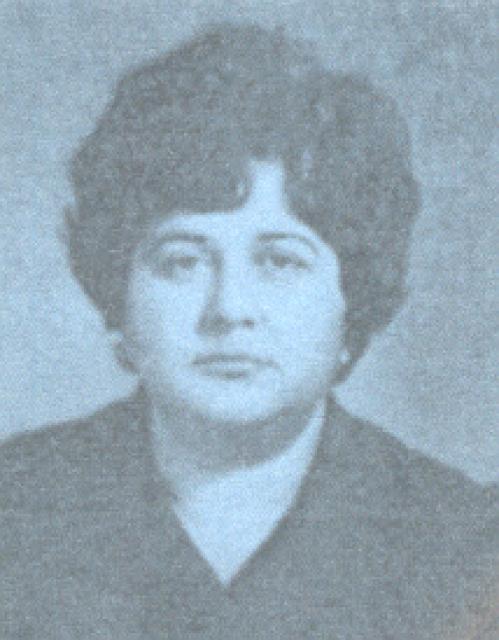
Elmira Kafarova
 Azerbaijan
- Early Life and Education
- Political Career
- Rise to Prominence
- Role in National Independence
- Controversies
- Legacy
Early Life and Education
Elmira Kafarova was born in Baku, Azerbaijan, and graduated from Baku Secondary School No. 189 in 1952. She went on to study philology at Azerbaijan State University, graduating in 1958.
Political Career
During her university years, Kafarova served as head of the Komsomol committee. In 1961, she earned a doctorate in philology. In 1962, she was appointed Chair of the Organizing Committee of the Komsomol of the Azerbaijan SSR, and from 1966 to 1970, she served as its First Secretary. She then held the position of Head of the Department of Culture of the Central Committee of the Communist Party of Azerbaijan for a year.
In 1971, Kafarova became the First Secretary of the Baku City Committee of the Communist Party. She was elected to the Congress of People's Deputies of the USSR.
Rise to Prominence
In 1980, Kafarova replaced 77-year-old Mehdi Mehtizade as Minister of Education of the Azerbaijan SSR. Three years later, she was appointed Minister of Foreign Affairs of the republic. In 1984, she participated in the autumn session of the UN General Assembly on racism and discrimination.
From 1987 to 1989, Kafarova served as Deputy Chairman of the Council of Ministers of the Azerbaijan SSR. She was also elected as Speaker of the Supreme Soviet of the Azerbaijan SSR, a position she held from 1987 to 1991.
Role in National Independence
During her tenure as Speaker, Kafarova played a critical role in Azerbaijan's move towards independence. She initiated an exhibition of weapons seized from Armenian fighters in Nagorno-Karabakh in the republic's representative office in Moscow. The event drew sharp criticism and threats from the KGB, the USSR Ministry of Internal Affairs, and the USSR Ministry of Defense.
Kafarova successfully lobbied for the return of the city of Kirovabad to its historical name, Ganja, and for the declaration of Novruz as a non-working holiday in Azerbaijan. She also played a key role in the adoption of the "Declaration on the Restoration of State Independence of the Azerbaijan Republic" on October 18, 1991, and Azerbaijan's admission to the UN on March 2, 1992.
Controversies
Kafarova's relationship with the emerging Azerbaijani opposition was strained. In September 1991, she criticized the opposition, calling them "drunkards and drug addicts." The statement was accidentally aired live, leading to a physical attack on Kafarova by female protesters outside the Supreme Soviet building.
Kafarova was absent from Moscow on the night of January 20, 1990, when Soviet troops entered Baku, resulting in the deaths of over 100 civilians. The decision to introduce a state of emergency in Azerbaijan was made by the Presidium of the Supreme Soviet in her absence and was later deemed "illegal."
Legacy
Kafarova was the only representative of the authorities, both at the national and republican levels, to address the people following the tragedy and condemn the actions of the Soviet leadership. Despite this, her name was mentioned in 1994 as one of those responsible for the January tragedy. However, no criminal case was initiated due to her death.
Elmira Kafarova died on August 1, 1993, of a myocardial infarction. She was buried in the Alley of Honor in Baku.