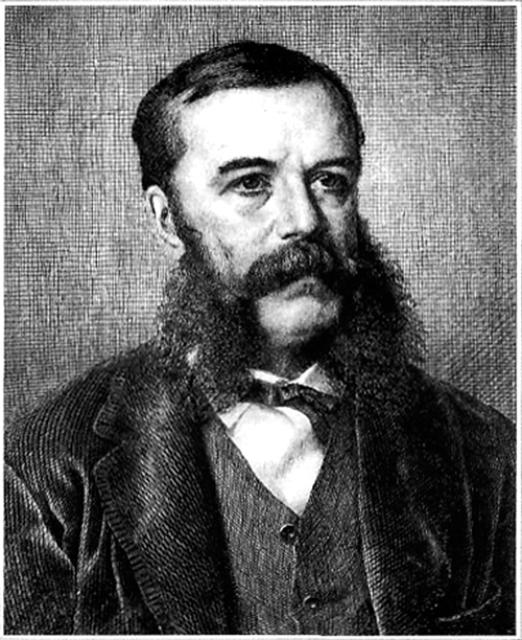
Emerik Gutten-Chapsky
- Early Life and Education
- Crimean War and Government Career
- Resignation and Later Life
- Marriage and Family
- Collection and Museum
Early Life and Education
Emeric Hutten-Czapski was born on a family estate in Minsk Governorate (present-day Belarus). He received his early education at the 1st Vilnius Gymnasium before pursuing a degree in physics and mathematics at Moscow University. After graduating in 1851, he joined the Ministry of Internal Affairs.
Crimean War and Government Career
Czapski participated in the Crimean War and later served as Vice-Governor of Novgorod (1863-1864) and St. Petersburg (1865-1867). He was also appointed Chamberlain by Emperor Alexander II and held leading roles in various government committees.
Resignation and Later Life
Disagreements with Emperor Alexander II led Czapski to resign from his government positions in 1867. He retired to his family estate in Stańkowo, where he devoted himself to collecting art and other artifacts. He also commissioned extensive renovations to the estate's palace complex.
Marriage and Family
In 1860, Czapski married Elisabeth von Meyendorff. They had four children: Karol Jan Alexander, Jerzy (George), Sofia, and Elżbieta. Karol Jan Alexander became mayor of Minsk, while Jerzy headed the Minsk Agricultural Society and the Red Cross Society.
Collection and Museum
Czapski's passion for collecting extended to a wide range of objects, including coins, archaeological finds, icons, paintings, weapons, and decorative arts. His library boasted over 20,000 books, including the renowned Brest Bible.
His numismatic collection initially focused on Russian coins but later expanded to include Polish and Lithuanian pieces. He acquired a substantial collection from Michał Tyszkiewicz in 1854 and continued to acquire coins throughout his life. His collection eventually numbered over 12,000 Polish coins and medals.
In his will, Czapski bequeathed his museum to the city of Kraków. The museum was formally established in 1903 and is now a department of the National Museum of Kraków. Czapski's numismatic collection has been preserved almost intact and remains a valuable resource for historians and collectors.