Eric Pomerania
 Poland
- Biography of Eric of Pomerania
- Ascension to the Norwegian Throne
- The Kalmar Union
- Alliances and Conflicts
- Downfall and Later Life
Biography of Eric of Pomerania
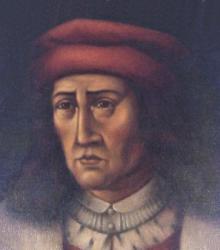
Eric of Pomerania, also known as Eric the Pomeranian, was born around 1381-1382 in Rügenwalde, Pomerania. He belonged to the noble family of the Dukes of Pomerania, and was initially named Boguslaw. His father was Wartislaw VII, Duke of Pomerania, and his mother was Mary of Mecklenburg-Schwerin. Eric's mother was the only surviving granddaughter of Valdemar IV of Denmark, making Eric a relative of Magnus III of Sweden and Haakon V of Norway.
Ascension to the Norwegian Throne
In August 1382, Olav IV, the King of Denmark and Norway, passed away without leaving any heirs. Queen Margaret of Denmark, Olav's mother, assumed the throne, and it was her decision to choose the next king. Queen Margaret selected the young Boguslaw, her niece's grandson, and he was brought to Denmark in 1389. Upon his arrival, the Queen changed his name to Eric. On September 8, 1389, Eric of Pomerania was proclaimed the King of Norway at the Ting in Trondheim.
The Kalmar Union
Queen Margaret continued to hold power until her death in 1412, but Eric was officially crowned as the King of Denmark, Sweden, and Norway on June 17, 1397, in Kalmar. This event marked the establishment of the Kalmar Union, which united the three Scandinavian countries under the supreme authority of the Danish kings. Despite sacrificing their sovereignty, the countries retained their autonomy.
Alliances and Conflicts
In the early 1400s, Queen Margaret arranged a marriage alliance with Henry IV of England for the security of the Scandinavian countries. As part of this alliance, Eric was to marry Henry's daughter Philippa. However, the double wedding between Eric and Philippa and their siblings did not take place. Instead, Eric married Philippa on October 26, 1406, when she was thirteen years old. This marriage brought a defensive alliance between Scandinavia and England.
Eric's reign was marked by conflicts with the Counts of Holstein, who united Holstein and Schleswig into the Duchy of Schleswig-Holstein. The prolonged war negatively impacted the Danish economy and did not bring any significant gains for the Kalmar Union, except for the introduction of the Sound Dues, a toll levied on ships passing through the Sound strait.
Downfall and Later Life
Eric of Pomerania's reputation suffered greatly, and the political situation in the country became unfavorable for his rule. In the 1430s, he faced strong opposition from Norway, Sweden, and Danish peasants due to his decision to grant important positions in the kingdom to native Danes.
As the situation worsened and even Danish nobility turned against him, Eric was forced to abdicate the Danish and Swedish thrones. He left Denmark and settled in his castle, Visborg, on the island of Gotland. He remained the King of Norway until 1442 when he renounced the throne, stating that he would rather be the leader of pirates in Gotland than the King of Norway.
Eric of Pomerania made several unsuccessful attempts to regain the Danish throne but eventually received permission to move to Pomerania, where he ruled the Duchy of Pomerania-Stolp. He passed away on May 3, 1459, in Rügenwalde, Pomerania.