Inge II
 Norway
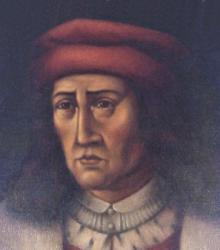
Inge II Bårdsson was king of Norway from 1204 until 1217, during the last phase of the country’s long civil-war era. A nephew of King Sverre Sigurdsson and a leader of the Birkebeiner faction, he ruled a kingdom repeatedly divided by rival claimants and armed groups. His reign was marked by a negotiated settlement with the Baglers that brought a period of relative peace, though political authority remained divided across the country.
Royal family and rise to power
Inge was born around 1185; the precise date and place are not known. His parents were the influential noble Bård Guttormsson and Cecilia Sigurdsdotter, sister of King Sverre. Through his mother he belonged to Sverre’s wider royal family, and he was the half-brother of Håkon Galen and Skule Bårdsson.
After King Håkon Sverresson died unexpectedly in 1204, the Birkebeiner faction chose the young Guttorm Sigurdsson as king. Inge was given authority in Trøndelag, while his half-brother Håkon Galen was made earl and led the king’s household and army. Guttorm died later that year, and Inge emerged as the main candidate from his family. The Birkebeiner assembly selected him as king, with Håkon Galen continuing as a powerful military and political partner.
Civil war and settlement
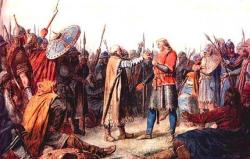
Inge’s reign unfolded amid the struggle between the Birkebeiner and Bagler factions, who had competing royal claimants and regional strongholds. The Birkebeiner drew support largely from Trøndelag and western Norway, while the Baglers were strongest in Viken, around the Oslofjord. Inge fought the Baglers in the early years of his rule, but neither side could easily secure lasting control of the entire kingdom.
In 1208, church leaders helped broker a settlement at Kvitsøy. Bagler king Philip Simonsson retained rule over Viken and the eastern territories, while recognizing Inge as overlord and giving up the claim to be sole king. The arrangement stopped major fighting between the factions for the rest of Inge’s reign, but in practice Norway remained divided. Håkon Galen and, after his death in 1214, Inge’s younger half-brother Skule Bårdsson exercised substantial influence over military affairs and government.
The sagas portray Inge as calm and peaceable, a temperament that contrasted with the violent political world around him. His later years were affected by poor health. He was also remembered for welcoming the young Håkon Håkonsson and his mother when they sought refuge in Trondheim in 1206, and for allowing the boy to be educated there despite his potential claim to the throne.
Death and succession
Inge became ill during the winter of 1216–17 and died in Trondheim on April 23, 1217. He was buried in Christ Church, now Nidaros Cathedral. Before his death he appointed Skule earl and commander of the royal forces. The Birkebeiner chose Håkon Håkonsson as king, while Philip, the Bagler ruler, also died in 1217. Inge’s reign had not fully ended Norway’s civil conflicts, but the settlement he helped secure laid important groundwork for the eventual consolidation of royal power under Håkon Håkonsson.