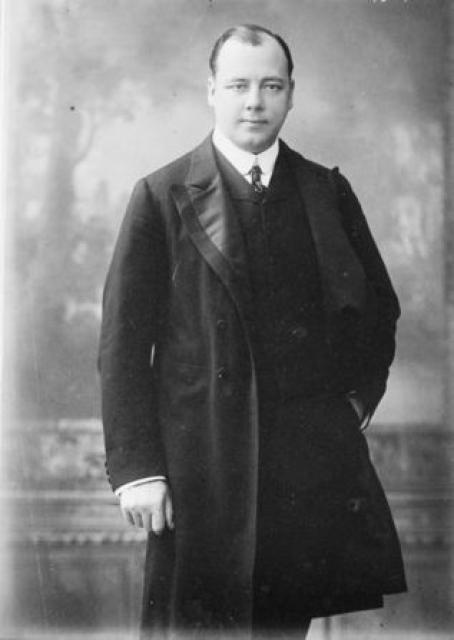
Erik Schmedes
 Denmark
- Early Life and Musical Training
- Debut and Career as a Tenor
- International Acclaim and Wagnerian Roles
- Versatility and Competition
- Film and Final Years
- Legacy and Influence
Early Life and Musical Training
Erik Anton Julius Schmedes was born on August 27, 1868, in Gentofte, Denmark, into a musical family. His younger brother, Hakon, became a renowned violin soloist. Erik initially studied as a baritone before discovering his true vocal potential as a dramatic tenor.
Debut and Career as a Tenor
In 1891, Schmedes made his debut as a baritone in Wiesbaden, singing the role of the King's Herald in Lohengrin. By 1898, he had transitioned to tenor roles, debuting as Siegfried at the Vienna State Opera. He became a prominent tenor at this prestigious theater, earning the title of Kammersänger under the direction of Gustav Mahler.
International Acclaim and Wagnerian Roles
From 1899 to 1906, Schmedes frequently performed at the Bayreuth Festival, showcasing his talents in Wagnerian operas. He also appeared at the Metropolitan Opera in New York during the 1908-1909 season, singing leading roles in Die Walküre, Götterdämmerung, Parsifal, Tristan und Isolde, and Tiefl Land.
Versatility and Competition
While specializing in Wagnerian repertoire, Schmedes was also acclaimed for his portrayal of Florestan in Beethoven's Fidelio and the title role in Hans Pfitzner's Palestrina. His primary competitor in Vienna was Leo Slezak, whose daughter once remarked that Slezak would have preferred to be a better actor like Schmedes.
Film and Final Years
In addition to his operatic career, Schmedes appeared in the silent film Inferno (1919) and later became a voice teacher in Vienna. He retired from the stage in 1924 and passed away on March 23, 1931.
Legacy and Influence
Erik Schmedes was remembered as an exceptional tenor with strong dramatic abilities. His extensive recordings for Gramophone and Pathé preserve his renowned performances. He remained a highly respected figure in both opera and music education, leaving behind a rich artistic legacy.


