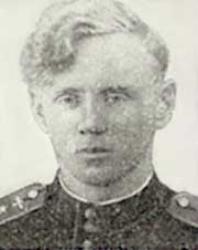
Eugeny Bereznyak
 Ukraine
- Biography of Evgeny Bereznyak
- Early Life
- Resistance during World War II
- Operation to Save Krakow
- Post-War Life
Biography of Evgeny Bereznyak
Evgeny Stepanovich Bereznyak was born on February 25, 1914. He became a prominent figure in Soviet history and served as the prototype for the hero in the film "Major 'Vortex," based on the novel by Julian Semenov.
Early Life
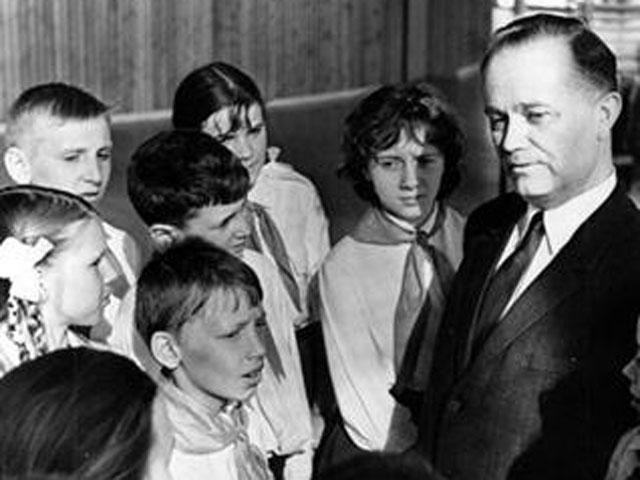
Before the start of the Great Patriotic War, Bereznyak worked as a teacher, deputy director, school principal, inspector, and head of the district. In the summer of 1940, he was elected as a deputy of the Lviv City Council and soon became the head of the Lviv City Department of Public Education. At that time, Lviv was a Polish city, with Polish being the dominant language. Only three out of eighty schools taught in Ukrainian. The city's education department aimed to promote Ukrainian language and culture, but faced resistance from the Polish population who accused Bereznyak of distorting the national policies of the Soviet government in Western Ukraine.
Resistance during World War II
In the early hours of the war, Evgeny Bereznyak agreed to become a member of the underground resistance in the occupied territory. From August 1941, he carried out clandestine work, performing special assignments. The reconnaissance group "Voice," which he joined, operated in the enemy's rear for 156 days starting from August 1944. During this time, they transmitted over 150 radio messages. The group managed to gather detailed intelligence about the Krakow fortification district and all the enemy's fortifications along the Vistula River south of Krakow. They obtained a plan of the city's mining, fully deciphered the actions of the enemy garrison in Krakow, and gathered information about the location of fascist divisions, armies, and corps, as well as air squadrons and military equipment transportations.

Operation to Save Krakow
The most significant operation carried out by the "Major Vortex" group was the disclosure of the Krakow mining plan. This plan could not be obtained even through Abwehr (German military intelligence). Therefore, the scouts had to capture a German engineer-major in broad daylight in front of the German garrison. For two weeks, they kept him in their underground hideout, where he drew up schemes and plans. The Germans planned to let Soviet troops enter Krakow and then blow up the city along with them. Thanks to the information obtained from their scouts, the advancing Soviet forces managed to enter the fort, where the enemy's headquarters and the "switch" that would have destroyed the city were located. All the information gathered and transmitted by the "Voice" group was fully confirmed during subsequent combat operations.
Post-War Life
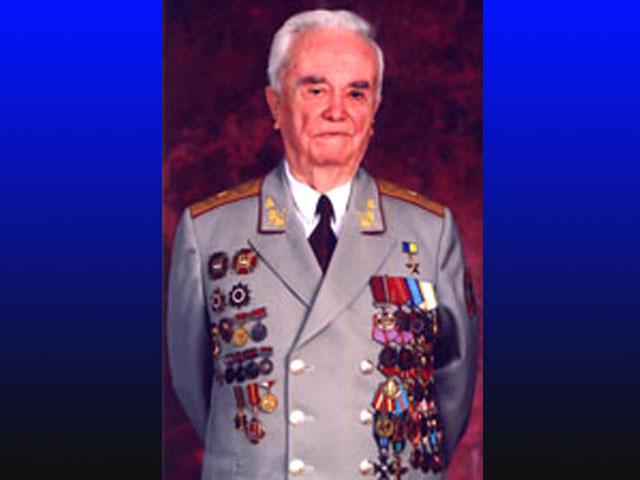
After the war, Evgeny Bereznyak again headed the Lviv City Department of Public Education. In 1949, the leadership of the Lviv underground organization UPA threatened him with the death penalty, but their attempt was unsuccessful. Bereznyak was awarded numerous government awards, including the Orders of the Patriotic War I and II degrees, the October Revolution, the Red Banner of Labor, the Order of Bogdan Khmelnitsky II and III degrees, and medals for Labor Valor I and II degrees, Merit, and Loyalty to Intelligence Traditions I degree, among others. The Polish government honored him with the Order of Virtuti Militari, the Golden Cross of Partisan Glory, and several medals, including the "For the Salvation of Monuments of Culture and Art" and "For the Salvation of Krakow." Evgeny Bereznyak is considered a Hero of Ukraine and retired as a colonel. He is forever enlisted as an Honorary Soldier of the Institute of Military Diplomatic Service of the Armed Forces of Ukraine. A scholarship named after Evgeny Bereznyak was established for students of higher military educational institutions.