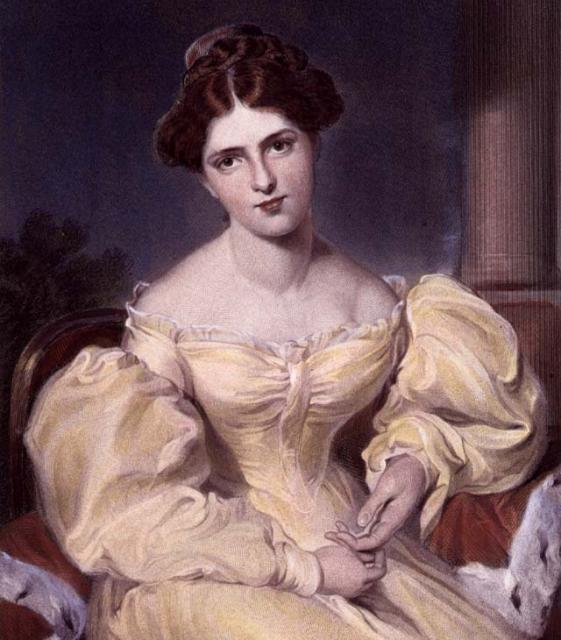
Fanny Kemble
 Great Britain
Biography of Fanny Kemble
Fanny Kemble was a British actress of the mid-19th century. Born into a renowned acting family, she was the eldest daughter of the famous actor Charles Kemble and the niece of actress Sarah Siddons. Her younger sister went on to become a renowned opera singer.

Early Life and Career
Fanny Kemble was born on November 27, 1809, into a well-known theatrical family. She spent her childhood in London but was sent to France for her education. In 1829, she made her debut on the stage at the Covent Garden Theatre in a production of "Romeo and Juliet." Her unique personality and striking appearance immediately captured the attention of the audience. Within a short period of time, the aspiring actress gained fame and began working alongside her father. She primarily portrayed female roles and her most successful characters included Portia, Beatrice, and Lady Teazle. Her most notable and successful role was that of Julia in the play "The Hunchback." In 1832, she embarked on a long tour of the United States with her father, performing in various cities including Boston in 1833.
Marriage and Activism
In 1834, Fanny Kemble decided to retire from the stage as she was about to get married. She married Pierce Butler, the heir to a large plantation and slaveholder in Georgia. However, after their wedding, Pierce's grandfather passed away, and he had to take over the family business. Fanny was horrified by what she witnessed on the plantations, particularly the inhumane treatment of the enslaved people. In 1839, she made the decision to leave her husband and filed for divorce in 1849. After the end of the American Civil War, Pierce Butler died.
Fanny Kemble never remarried. In 1847, she returned to the stage, as she needed the money. Her later works included roles in Shakespearean productions. She also engaged in writing and songwriting, with many of her compositions gaining popularity among audiences.
Even after her divorce, Fanny Kemble openly advocated against slavery. She had firsthand knowledge of the treatment of African Americans and actively sought to help them through her appeals. While many did not understand her efforts and chose to ignore them, her actions did not go unnoticed. In 1863, her articles in the well-known American magazine "Georgian Plantation" gained significant popularity.