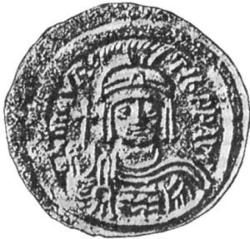
Feodora
Theodora was one of the most influential women in the history of the Byzantine Empire. Empress alongside Justinian I from 527 until her death in 548, she took an active role in court politics, religious affairs and the crises that shaped the empire. Her rise from a family connected to Constantinople’s Hippodrome to the imperial throne became the subject of both admiration and hostile legend.
Early Life and Marriage
Theodora was born around 500, probably in Constantinople. Her father, Acacius, worked with the bears associated with the Hippodrome’s Green faction. The details of her youth are difficult to establish. Much of the vivid account of her early years comes from the “Secret History” by Procopius, a historian whose writings portray Theodora very differently across his works and whose account of her private life is widely treated with caution.
Theodora worked as a performer before entering the imperial court. She met Justinian, then a powerful adviser to his uncle, Emperor Justin I. After a change in the law made their marriage possible, they married around 525. When Justinian became emperor in 527, Theodora was crowned empress and joined him at the center of imperial government.
The Nika Revolt
Theodora’s political standing became especially visible during the Nika revolt of 532. Factions in Constantinople’s Hippodrome united in a violent uprising that threatened Justinian’s rule. Procopius records that Theodora argued against fleeing the capital, urging the imperial court to stand firm. The revolt was suppressed, and Justinian remained in power.
The account of Theodora’s speech comes from a source with its own political perspective, but her role in the crisis has endured as an emblem of her resolve. She was not merely a ceremonial presence: diplomatic and political decisions of the reign were made in a court where she exercised real influence.
Religion and Social Policy
Theodora supported Miaphysite Christians, whose beliefs differed from the imperial religious policy favored by Justinian. She offered protection to religious leaders and communities and used her position to sustain their presence in Constantinople. Her support made the imperial court a place of negotiation as well as disagreement over Christian doctrine.
Justinian’s government also enacted laws concerning marriage, women’s legal standing and the exploitation of girls in prostitution. Historians debate how directly Theodora shaped particular statutes, since the laws themselves do not consistently name her. Procopius and other accounts connect her with efforts to rescue women from brothels and provide a refuge for those seeking to leave prostitution, including the convent known as Metanoia, or “Repentance.”
An Enduring Image
Theodora died in 548, likely from cancer, before Justinian’s death in 565. Her image survives in the celebrated sixth-century mosaics at the Basilica of San Vitale in Ravenna, where she appears in imperial robes with her attendants. Together with the accounts of chroniclers, the mosaic presents a powerful public image of an empress who helped shape her age and commanded attention in her own right.