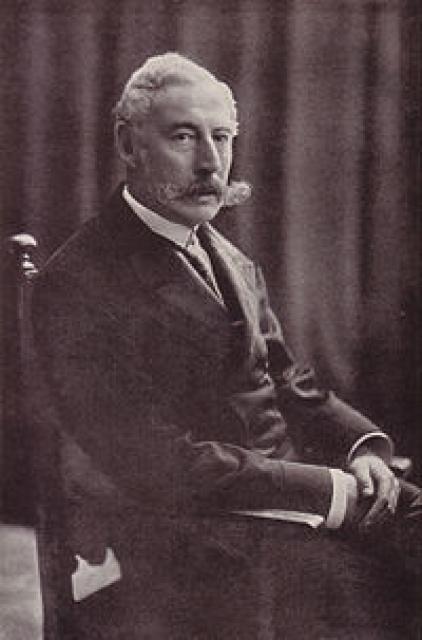
Ferdinand Felner
 Austria
Biography of Ferdinand Fellner
Ferdinand Fellner was an Austrian architect and a prominent figure in the Munich school of architecture during the late 19th and early 20th centuries. He is best known for his collaboration with German architect Hermann Helmer in designing and constructing around 48 theaters across Central and Eastern Europe, blending Renaissance and Baroque elements.
Born into a family of architects, Ferdinand Fellner (also known as Ferdinand Fellner the Younger) received his education at the Vienna University of Technology. In 1870, he worked in Brno before founding the architectural firm "Fellner & Helmer" together with Hermann Helmer in 1873. Under the leadership of these two partners, the firm went on to design and build theaters in various cities across Austria, Germany, Bulgaria, Croatia, Czech Republic, Slovakia, Hungary, Poland, Romania, Switzerland, and Ukraine (including Odessa and Chernivtsi).
One of their notable works is the Odessa National Academic Theatre of Opera and Ballet, completed in 1887, which was constructed in the Viennese Baroque style. The auditorium of the theater features a late French Rococo design. Another significant project undertaken by Fellner and Helmer was the construction of the new building for the Vienna Observatory between 1874 and 1879. This observatory housed the largest telescope in the world at that time and was inaugurated by Emperor Franz Joseph I.
Ferdinand Fellner and his wife Katharina had two children: Melanie and Ferdinand, also known as "Ferry." Despite his prolific architectural career and numerous accomplishments, there is limited information available about Ferdinand Fellner's personal life. His architectural legacy, however, continues to be celebrated and admired, with many of his theaters still standing as iconic landmarks across Europe.


